SOLIS LAW FIRM
The Geometry of Persuasion
How five hundred square feet of a tired apartment learned to argue its own case — and won
At Bricolage Bombay we have always believed that a small project is not a small idea. It is simply an idea with less room to hide. When my friend Sandeep Manubarwala called to tell me he was leaving the comfort of the known to start his own practice — Solis Law — and asked whether I would design his first office, I said yes before I had seen the space. I said yes to the friendship, to the courage of a man building something from nothing, and to a question I did not yet know how to answer: how do you make a beginning feel like an arrival?
Then I saw the apartment. A very tiny, rundown flat, tucked into a building so modest that you could not carry much up its narrow staircase. Five hundred square feet, give or take. Walls that had given up. The kind of space the world would call a constraint. To me it became the most interesting brief I had been handed in a long time.
Designing against the size of the room
Can a space be made to feel larger than its own measurements — not by lying about them, but by changing what the visitor measures?
Sandeep and I share a small, slightly cinematic obsession. We had both watched Suits — that television universe of glass towers, endless corridors, and partners who command rooms the size of basketball courts. A new law firm carries an invisible weight: the client, walking in, is silently asking whether this lawyer is big enough to carry their worry. Scale, in a law office, is not vanity. It is reassurance. It says, you are in capable hands.
So the real commission was never about square feet. It was about the perception of stature. How do you give a startup the magnificence of a Manhattan firm inside a Mumbai apartment you could cross in eight steps? Not by pretending to be large — the room would have caught us in the lie immediately — but by removing everything that announces smallness. Heavy fixed furniture announces smallness. Clutter announces smallness. Dark, busy surfaces announce smallness. We decided, from the first sketch, that this office would whisper rather than crowd.
The discipline of the flat pack
What if the building’s greatest limitation — its staircase — became the rule that organised the entire design?
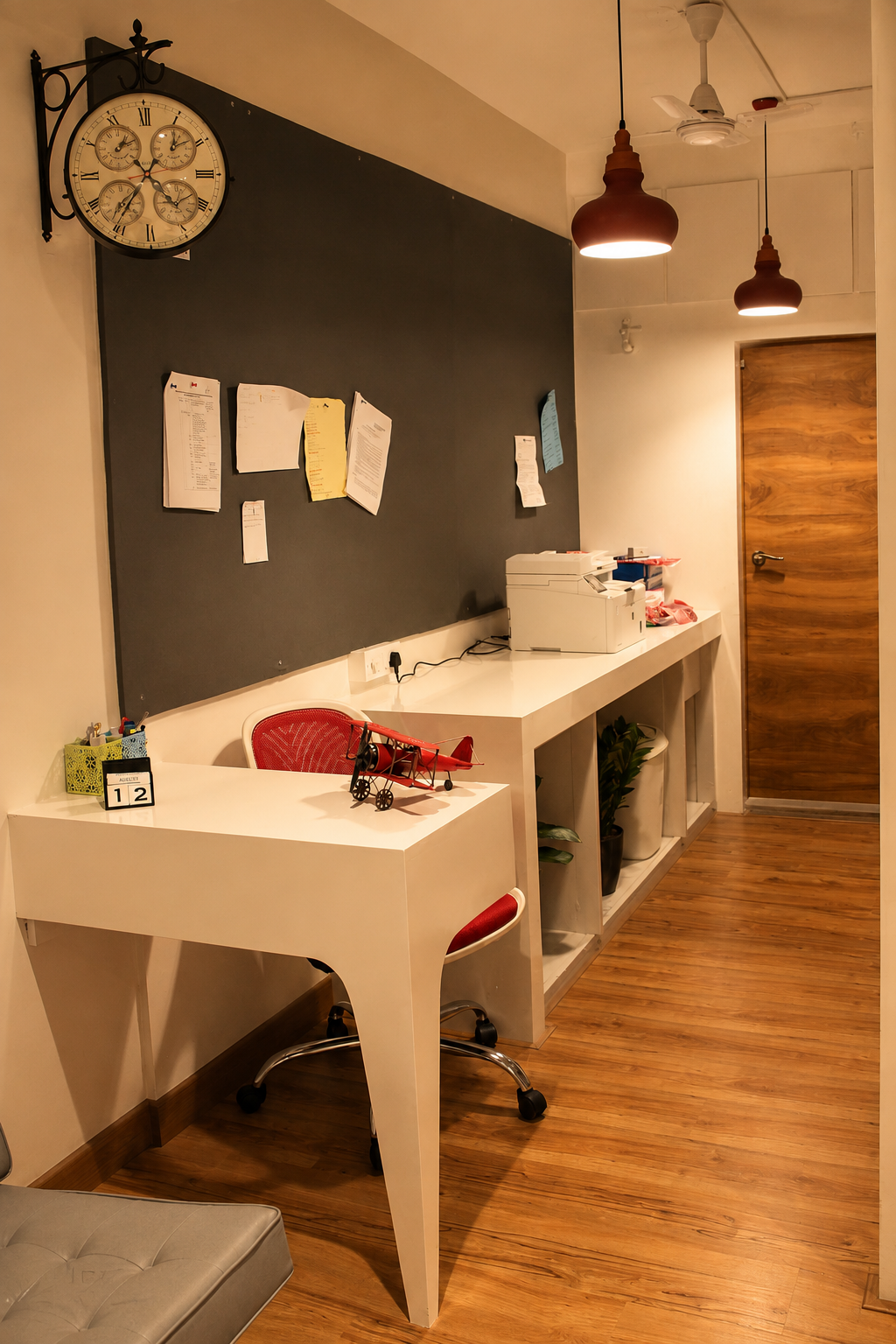
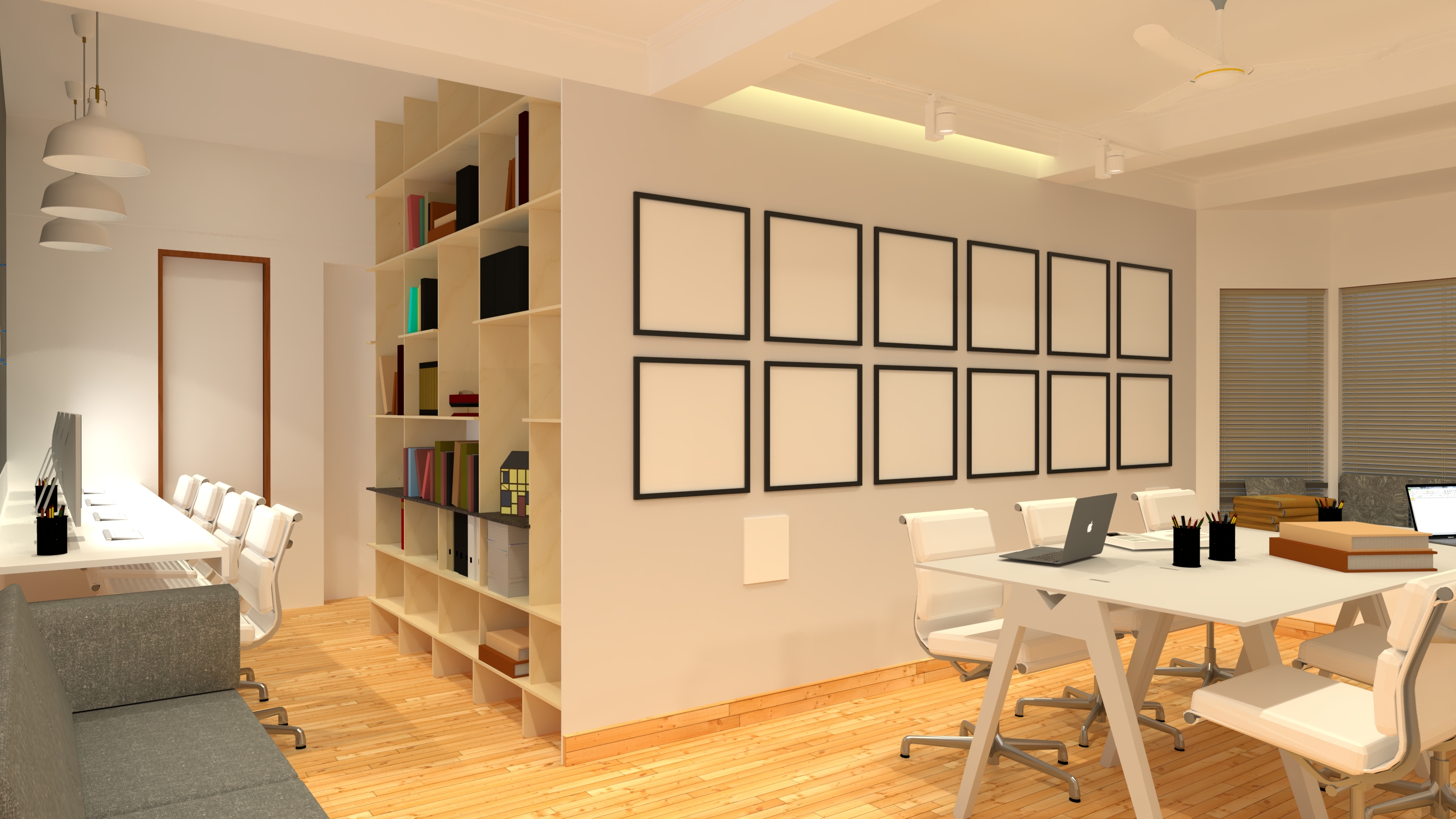
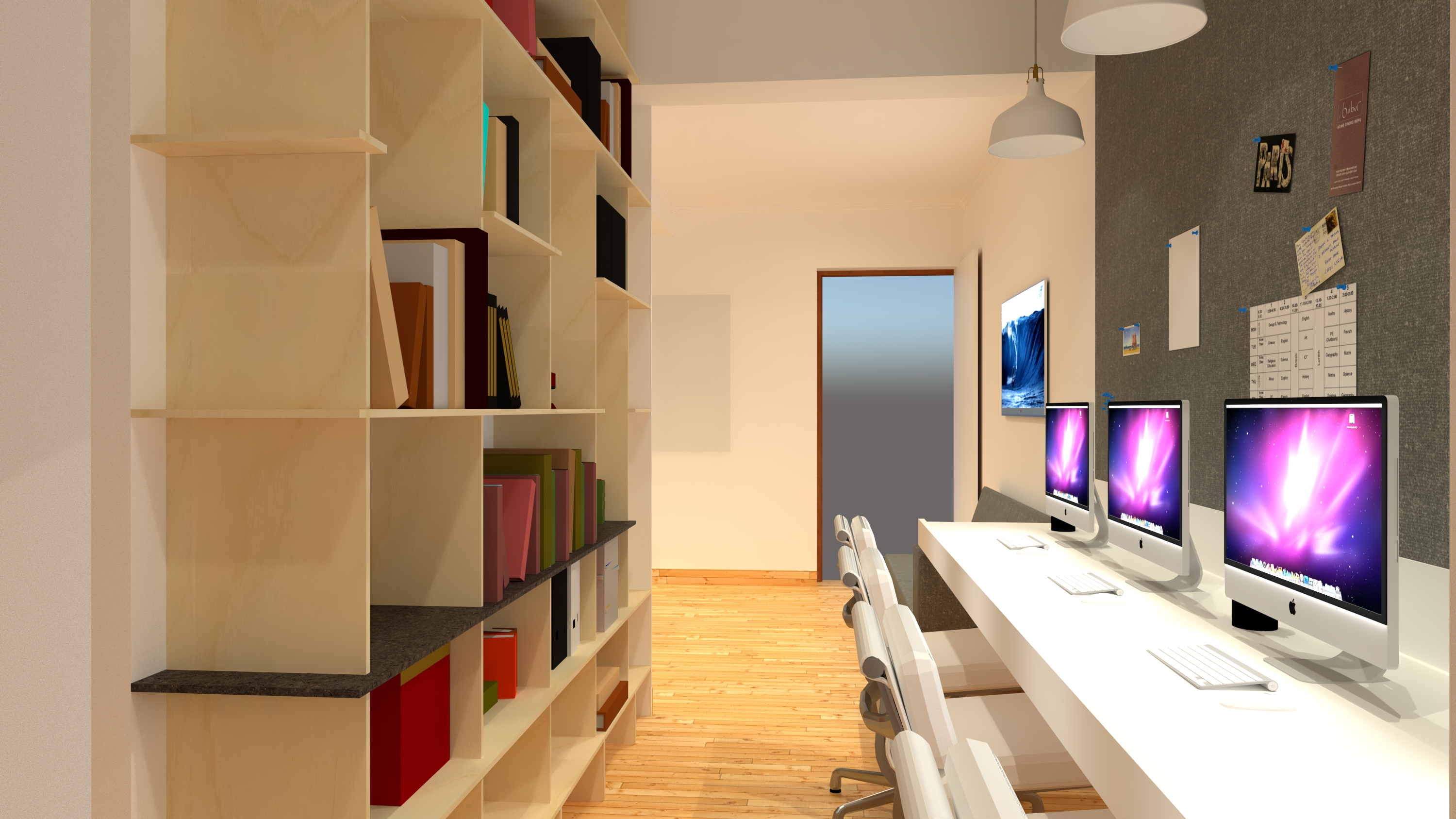
The narrow staircase was the project’s quiet tyrant. Nothing bulky could go up it. A lesser problem to some; to us, a design generator. We committed the whole interior to the logic of flat-pack furniture — pieces that travel as panels and become themselves only once they are inside. This was not a compromise we accepted reluctantly. It became the grammar of the place. Flat-pack thinking is, in its honest way, a philosophy: economy of means, lightness, the refusal of permanence, the belief that a room should be assembled by intelligence rather than by brute weight.
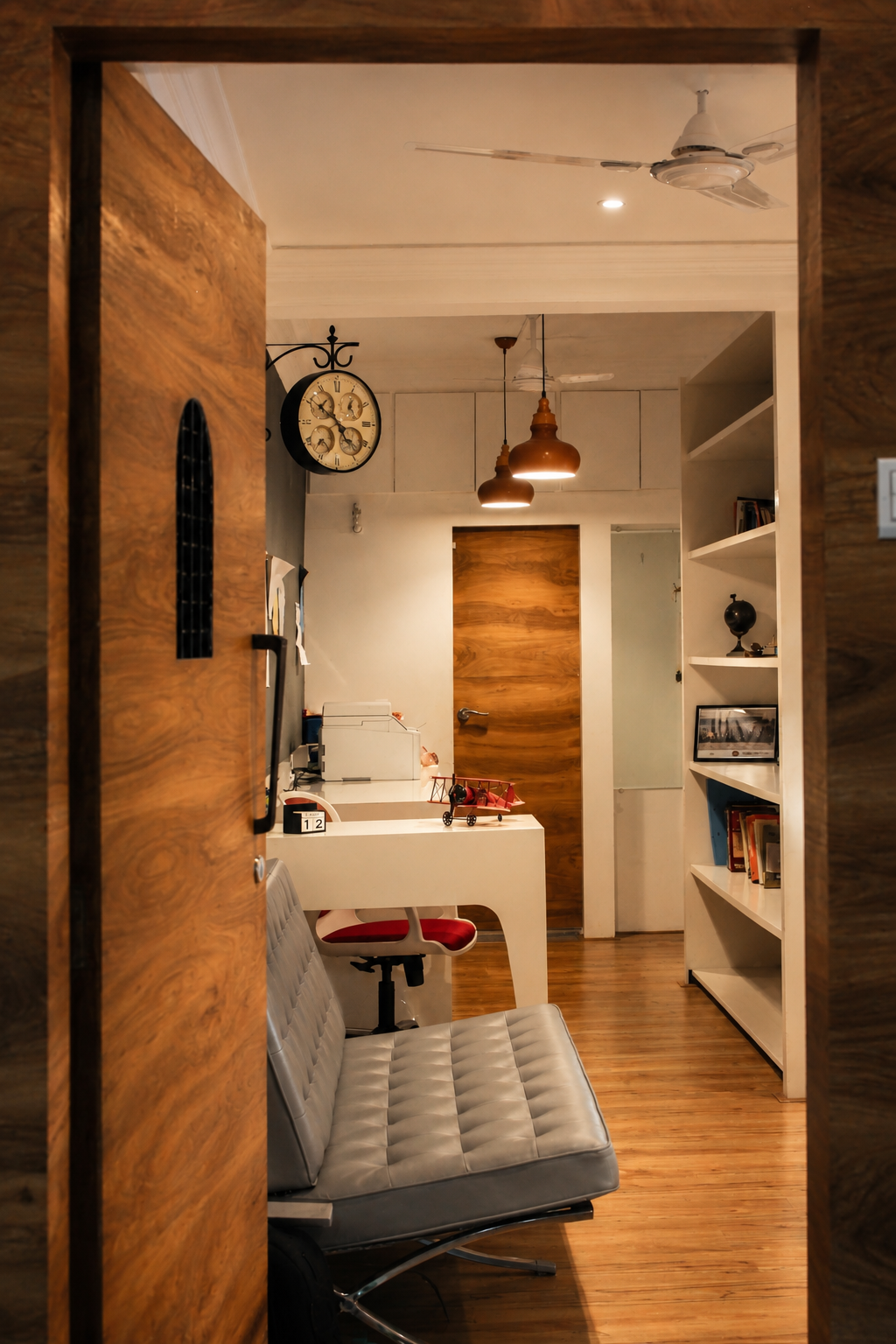
By keeping fixed joinery to an absolute minimum, the floor stayed free. Light moved without obstruction. The eye, finding no heavy object to stop it, kept travelling — and a room the eye keeps travelling through always feels larger than a room the eye keeps bumping into. Restraint, here, was not austerity. It was generosity made of empty air.
A white canvas, and where it lets the colour fall
If you take everything away, what little you add begins to speak loudly.
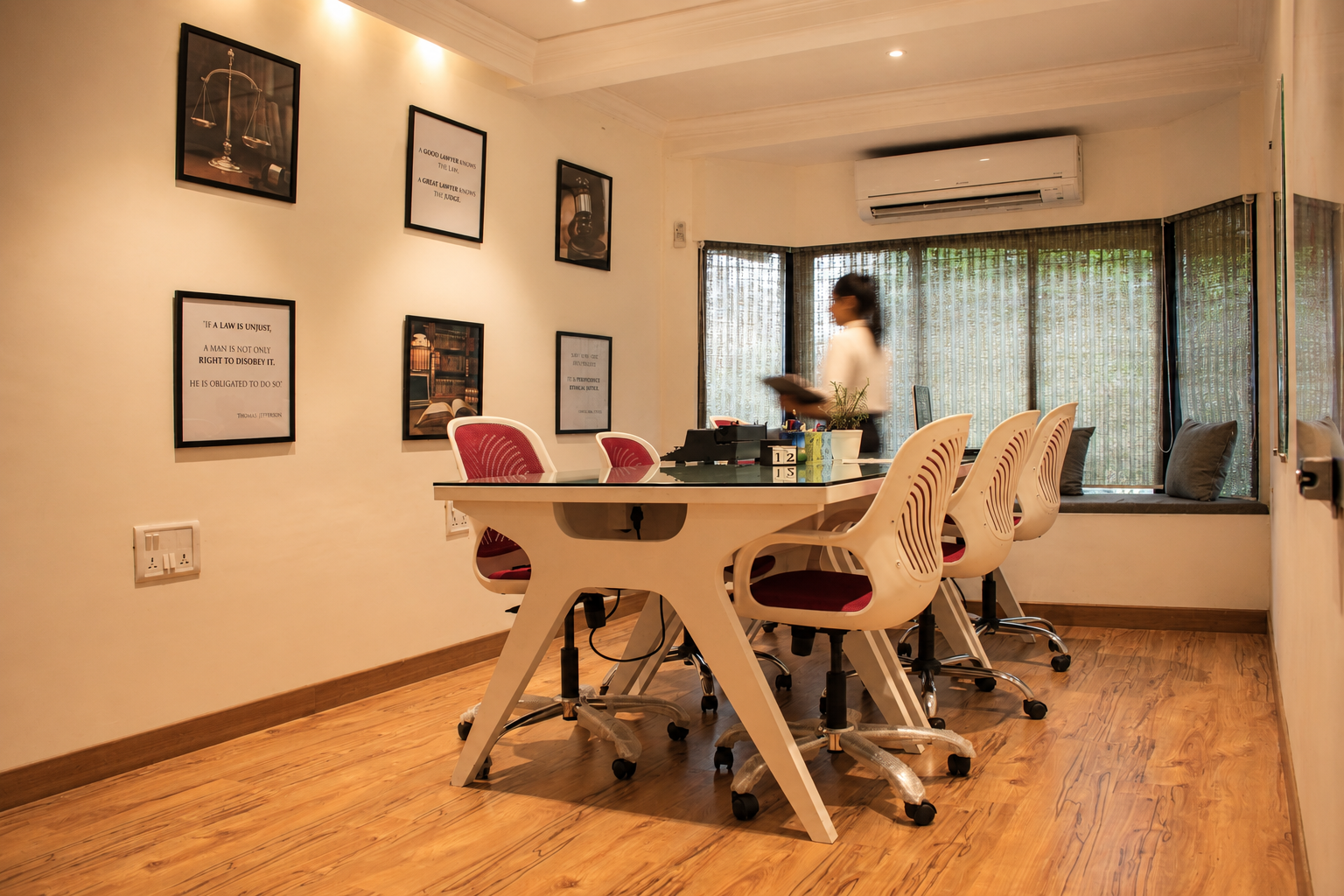
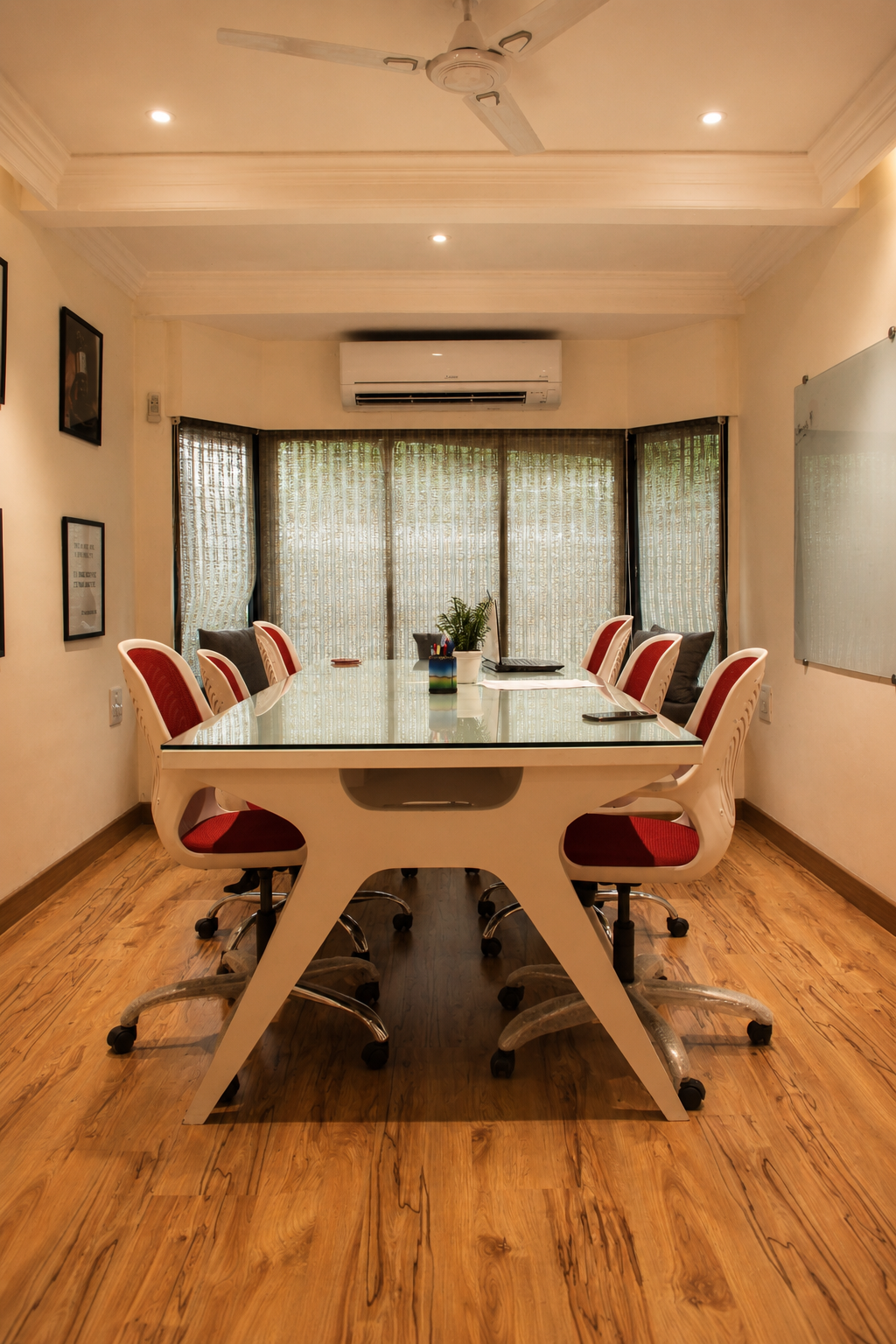
We made the space largely white. Not the clinical white of a hospital, but a white that behaves like a canvas — patient, reflective, willing to borrow whatever light the day offers and give it back doubled. Against that calm field we allowed colour to arrive only where it mattered: tones and accents of grey for seriousness, of red for the quiet authority a firm of law should carry, with the occasional other note to keep the rooms from feeling like a showroom. Colour, used sparingly, reads as confidence. Colour, used everywhere, reads as nervousness. We wanted Solis to look certain of itself.
The room that does many things at once
In a small space, a piece of furniture earns its place only if it can hold more than one human moment.
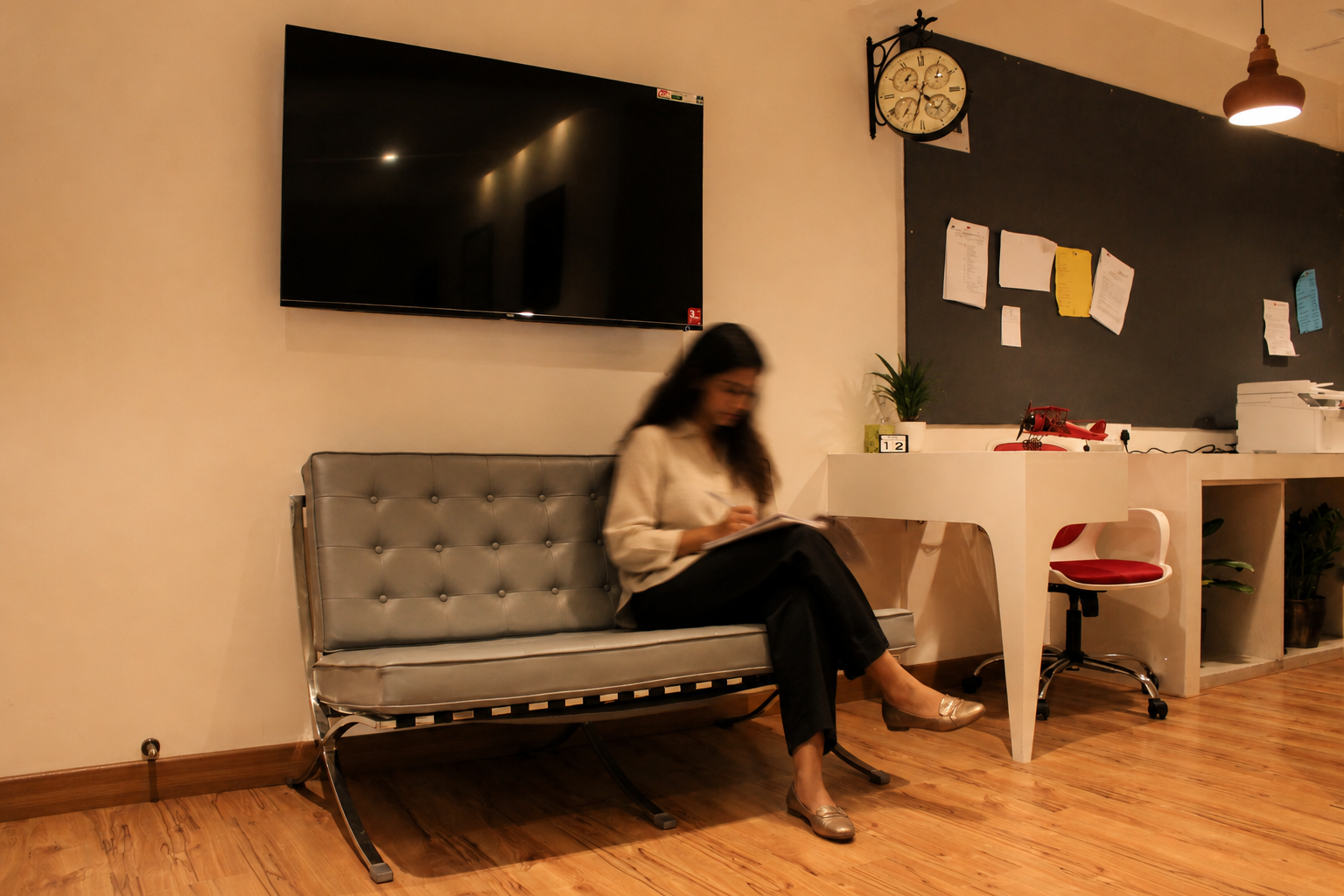
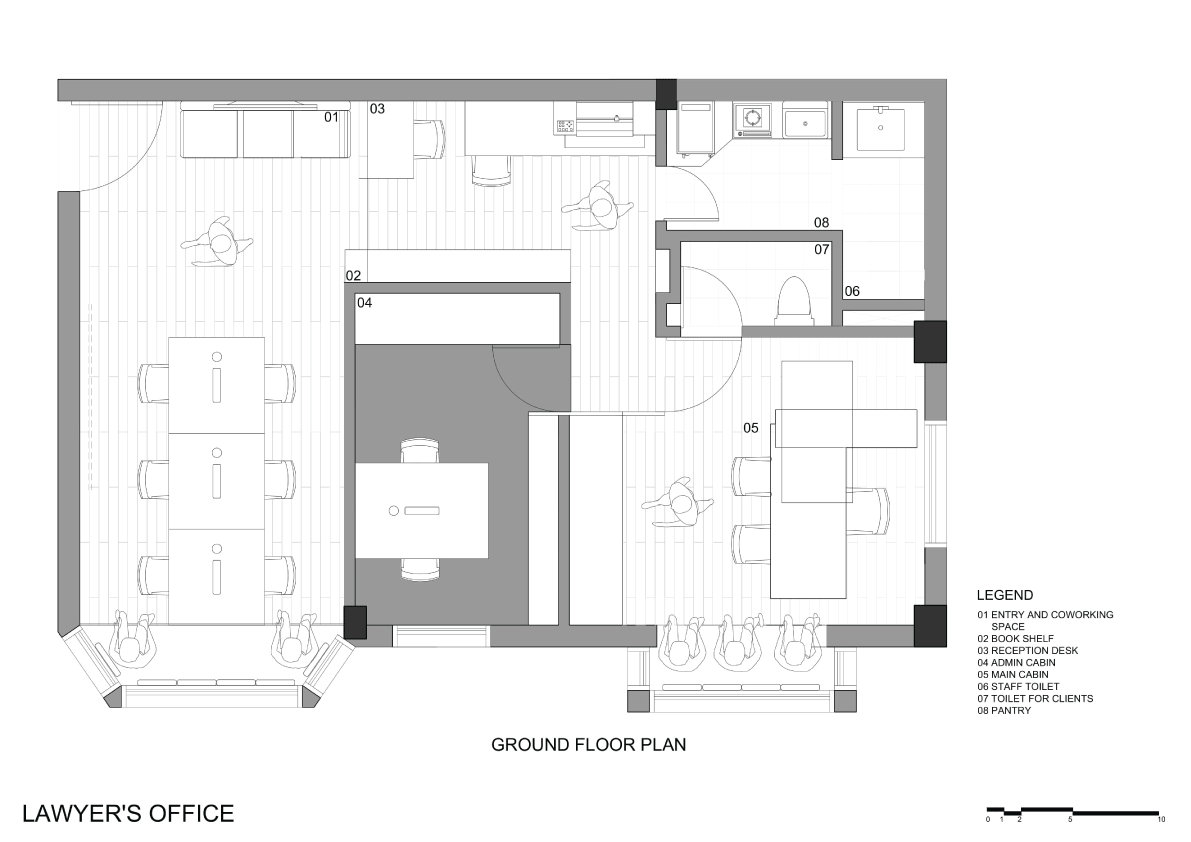
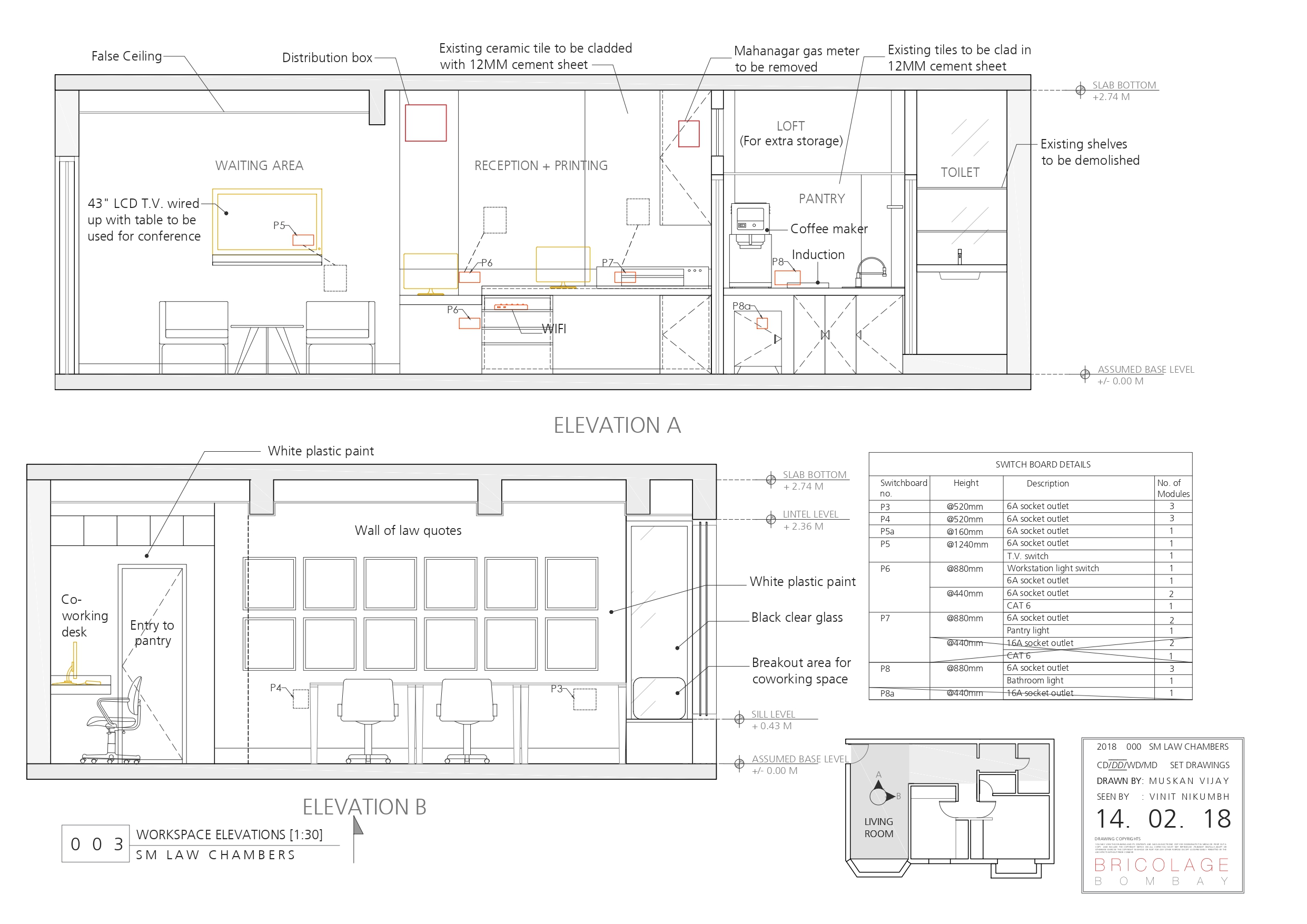
The first room you enter had to do the most work, because first rooms always do. With the little space we had, we composed a small reception — enough to be received, to be acknowledged, to feel expected. We gave the law books a home, because a wall of books is the oldest and truest signal of a legal mind at work; they are at once a library and a quiet argument for credibility. We made a place for people simply to sit. And at the centre of it all we set a counselling table.
That table surprised even us. It was meant to be functional — a surface for a conversation. It became communal. It is where the firm gathers, where a worried client first puts down their problem, where strategy is argued and tea goes cold. A single, well-placed object became the social heart of the office. This is the small miracle small spaces offer: when you cannot have many things, the few things you have become richer, more loved, more layered in meaning.
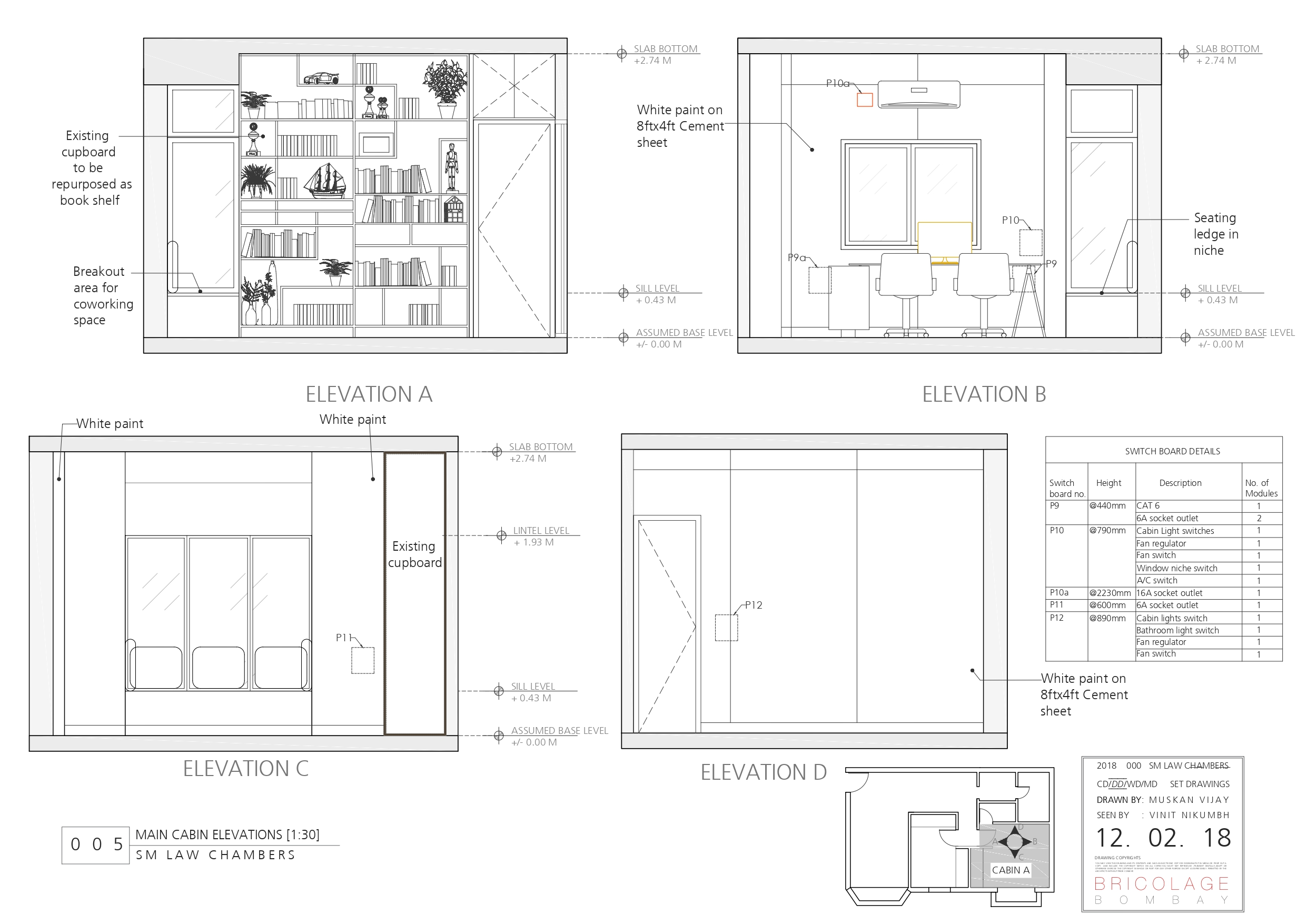
Beyond that room, threaded carefully into the same five hundred square feet, we fitted a tiny pantry and kitchen, a restroom, and an inner consultation room for Sandeep — a private chamber where confidence becomes counsel and a client can speak freely. Everything a law firm needs to function, complete, nothing missing, nothing oversized.
What a small space taught us
I keep returning to the lesson Solis gave me, because it is the lesson our practice was named for. Bricolage is the art of making something resourceful and whole from what is at hand. A rundown apartment, a hostile staircase, a startup’s budget, a friend’s enormous ambition — these were our materials. We did not fight the smallness. We out-thought it.
The office, when it was finished, did not feel like five hundred square feet. It felt like a firm that knew where it was going. And that, finally, is the thesis Solis proves: scale is not a property of the floor plan. It is a product of design, of interpretation, of problem-solving — of thinking. A small space, considered carefully enough, can be made to feel genuinely large. Sandeep got the dignity of a beginning that already looked like an arrival. And I was reminded, once again, that the size of a room has very little to do with the size of what happens inside it.
Client: Sandeep Manubarwala
Area : 500 sqft
Typology: Interiors
Status: Completed