ISKCON @ Talasari — Eco-Village Masterplan
The masterplan for an ISKCON eco-village at Talasari, on the Mumbai-Surat highway, is one of the largest-scale planning assignments in the Bricolage Bombay portfolio — and one of the most philosophically demanding. To plan a community around spiritual practice, ecological sustainability, and responsible tourism simultaneously is to face, in the most acute form, the question of what architecture is for. It is not for investment returns or market differentiation. It is for the quality of a life lived in accordance with values — values that, in this case, are both ancient and urgent.
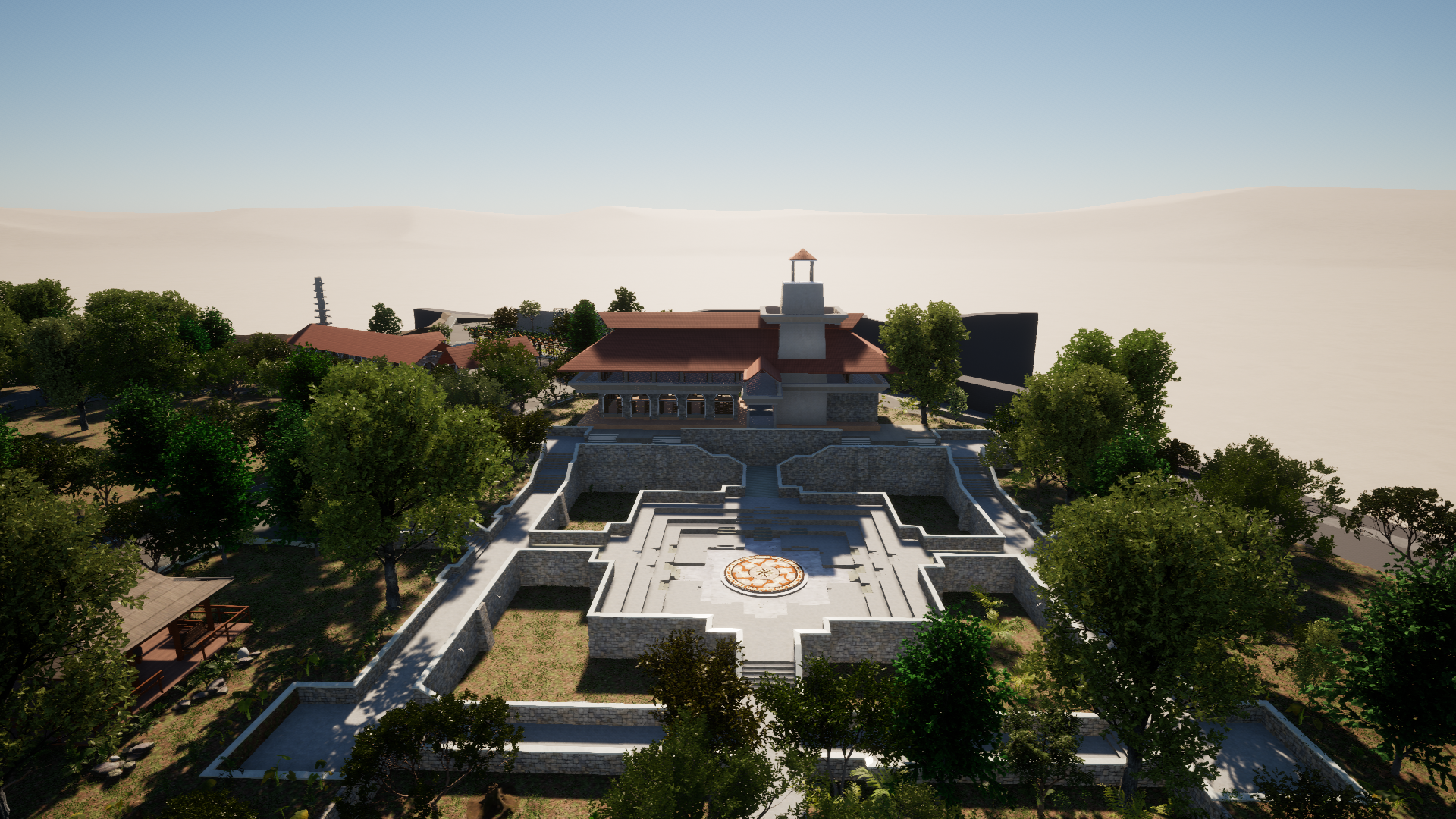
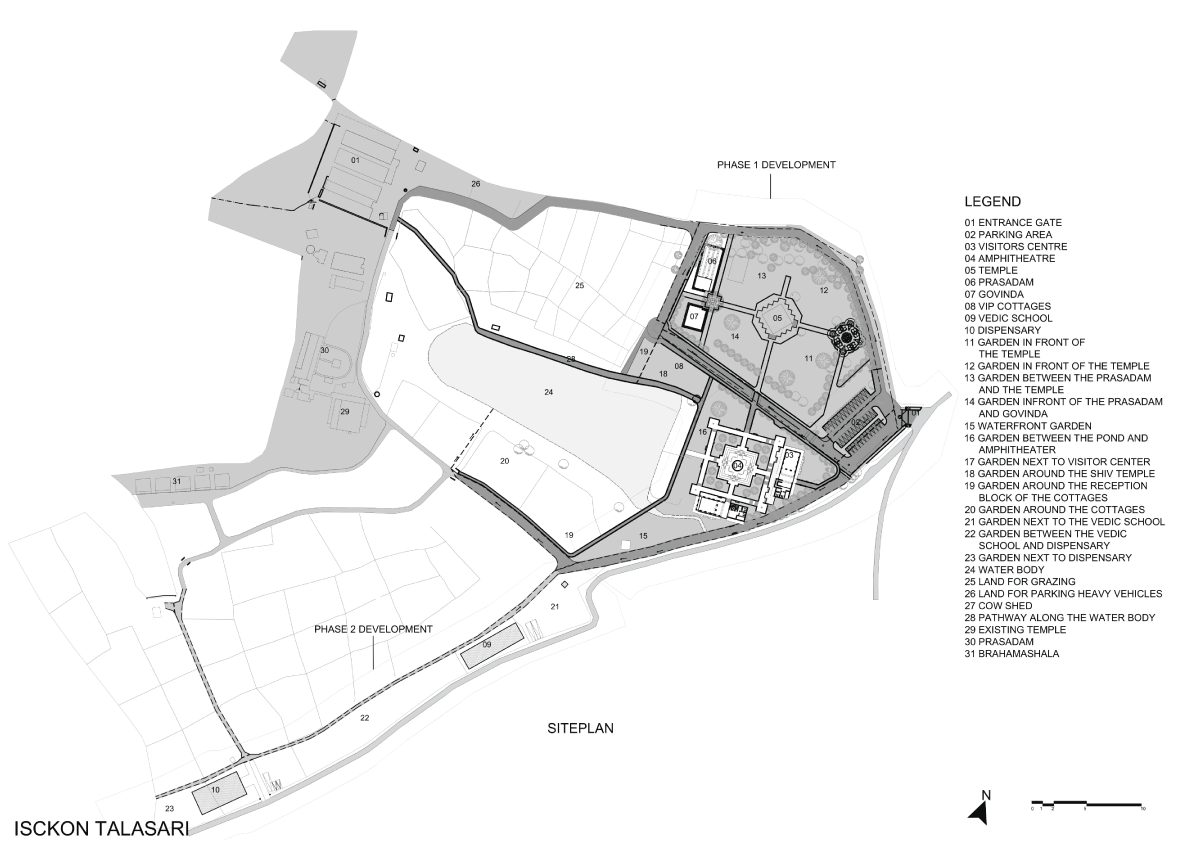
The thirty-six acre site extends along the coast of Maharashtra, between the western ghats and the Arabian Sea, in a region of extraordinary natural richness. Bricolage Bombay’s masterplan was developed around a commitment that is, in the contemporary Indian development landscape, radical in its simplicity: not a single tree would be removed. The site’s existing ecology — its forest cover, its water catchment patterns, its native species — was mapped in detail before any planning decisions were made, and the built programme was organised to fit within the ecology rather than to displace it.
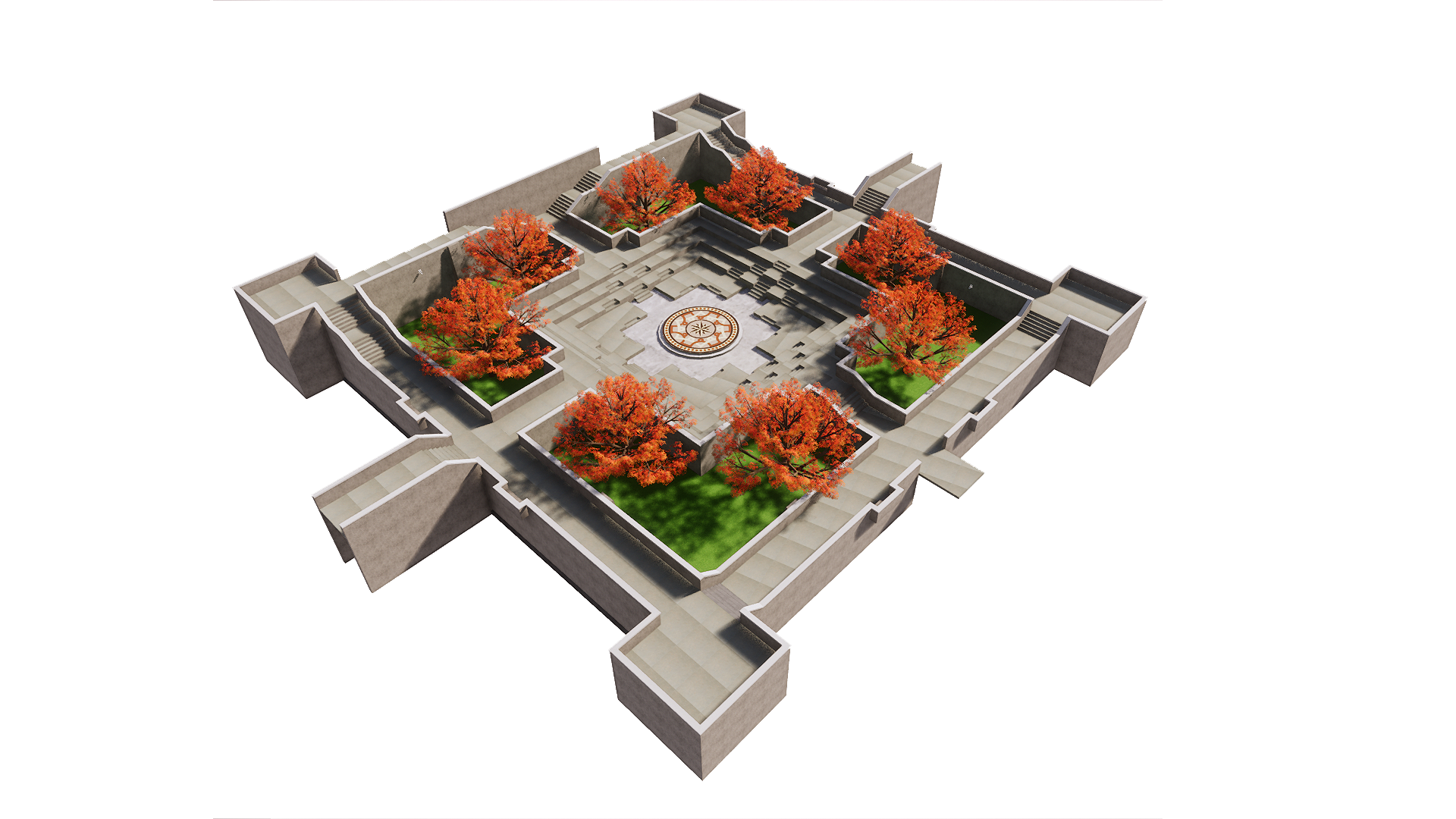
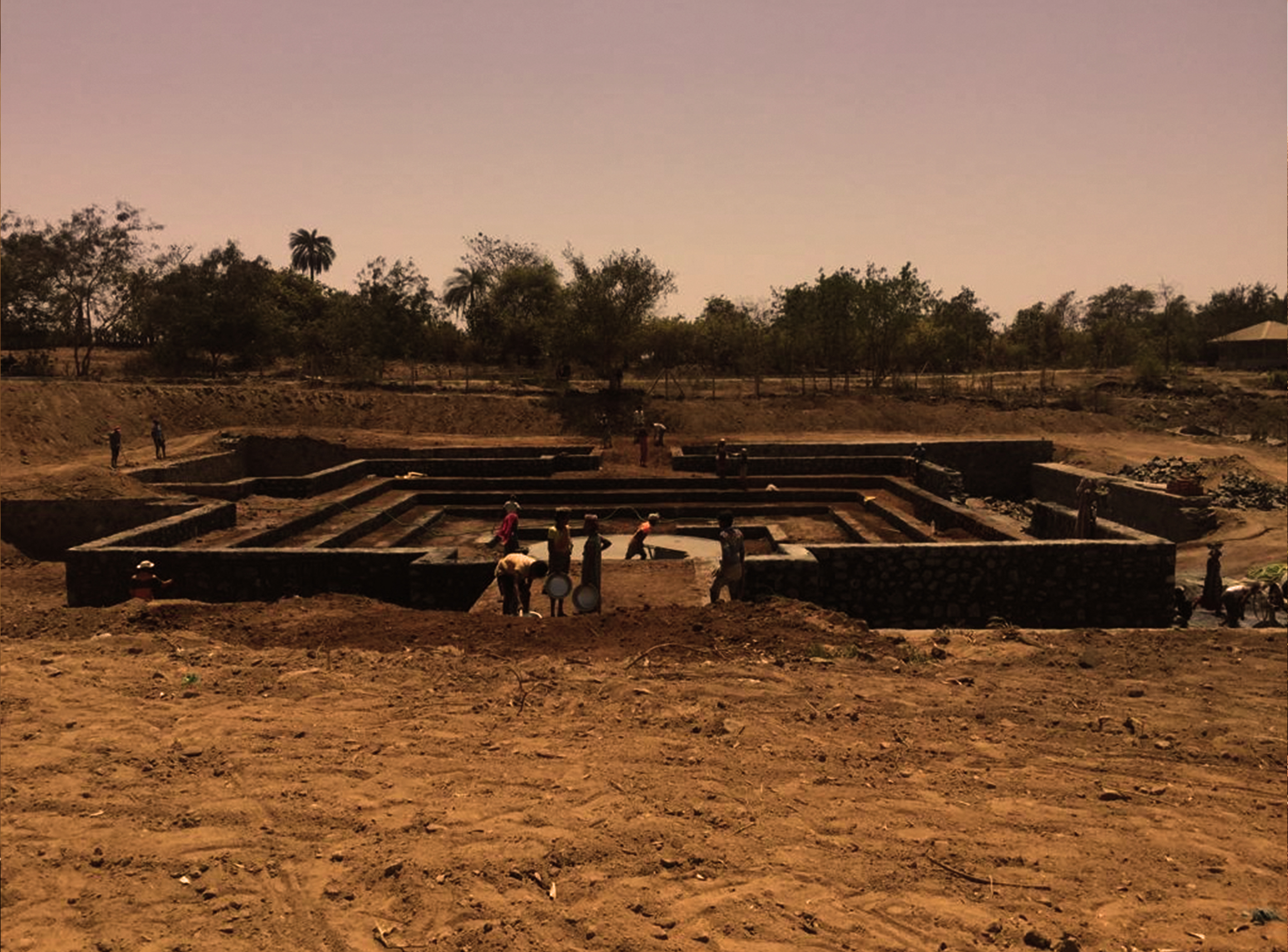
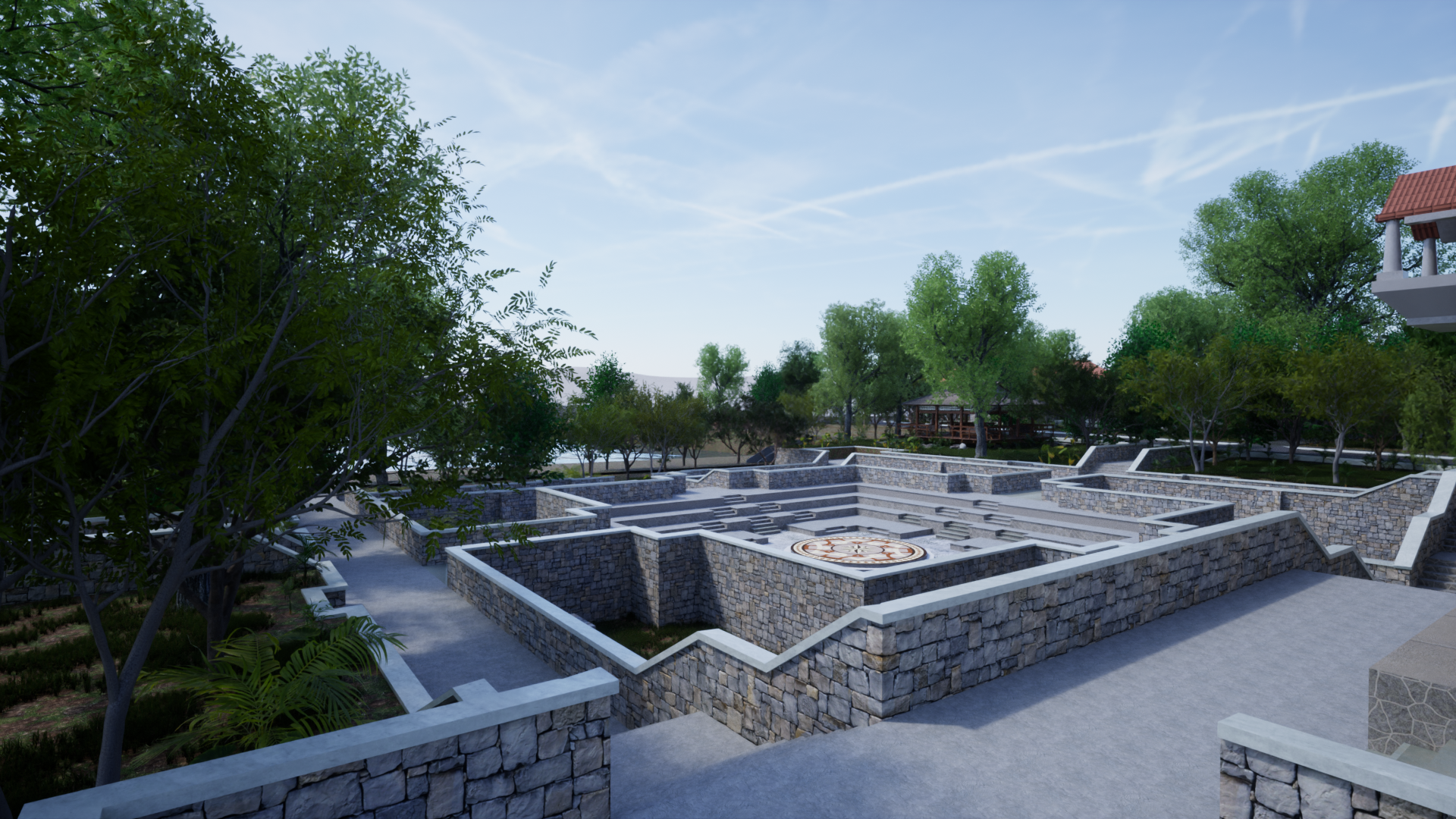
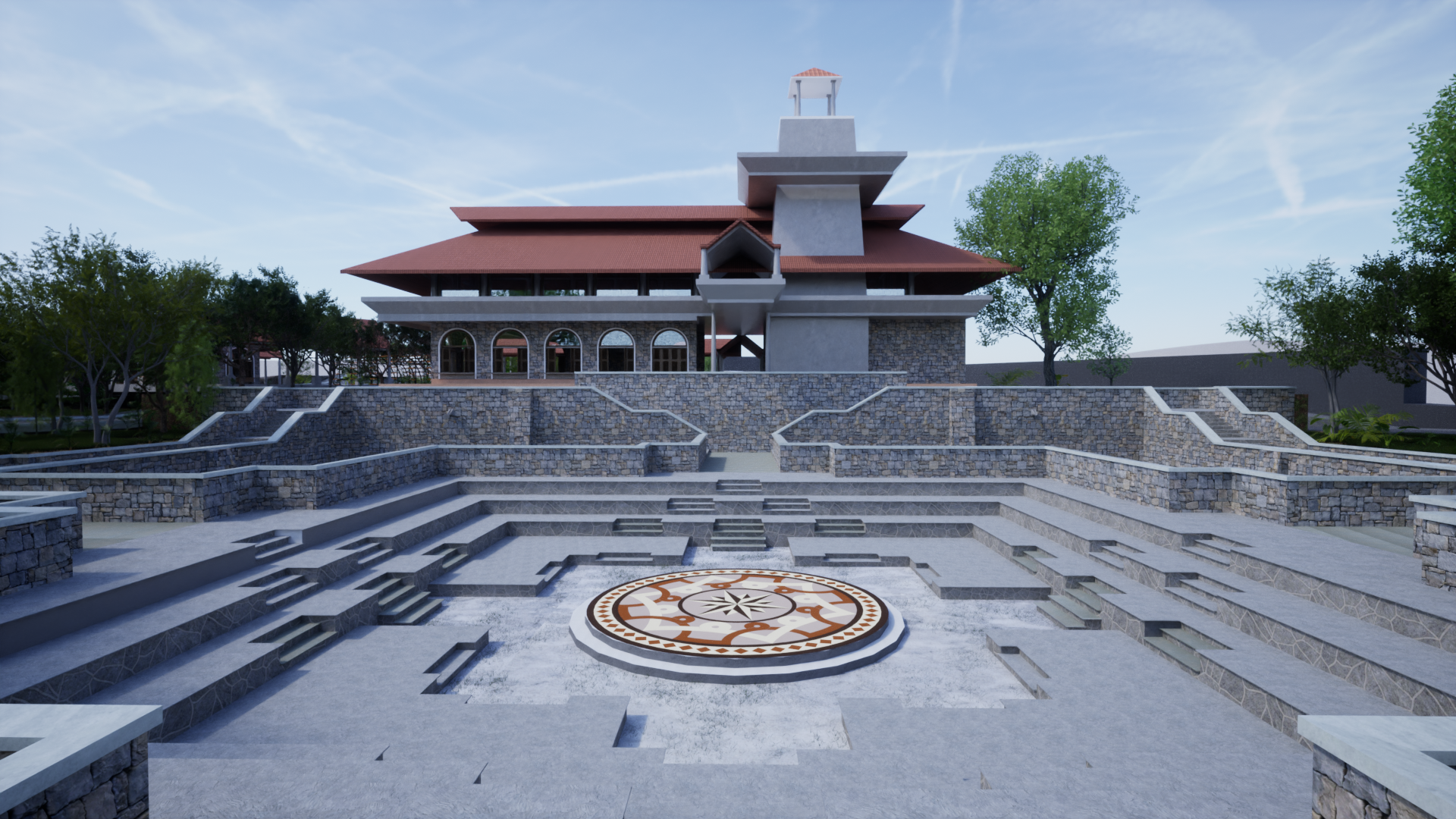
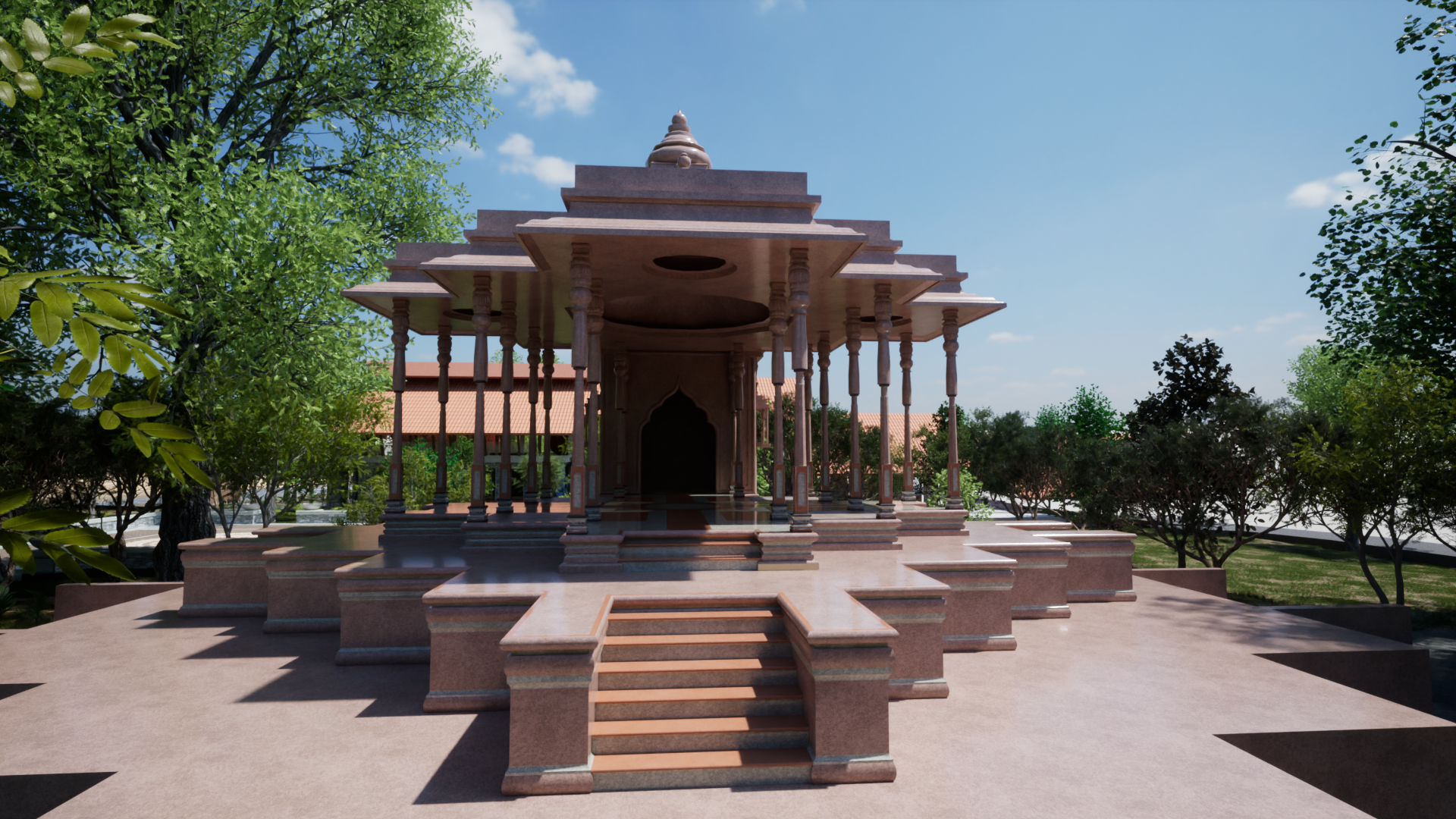
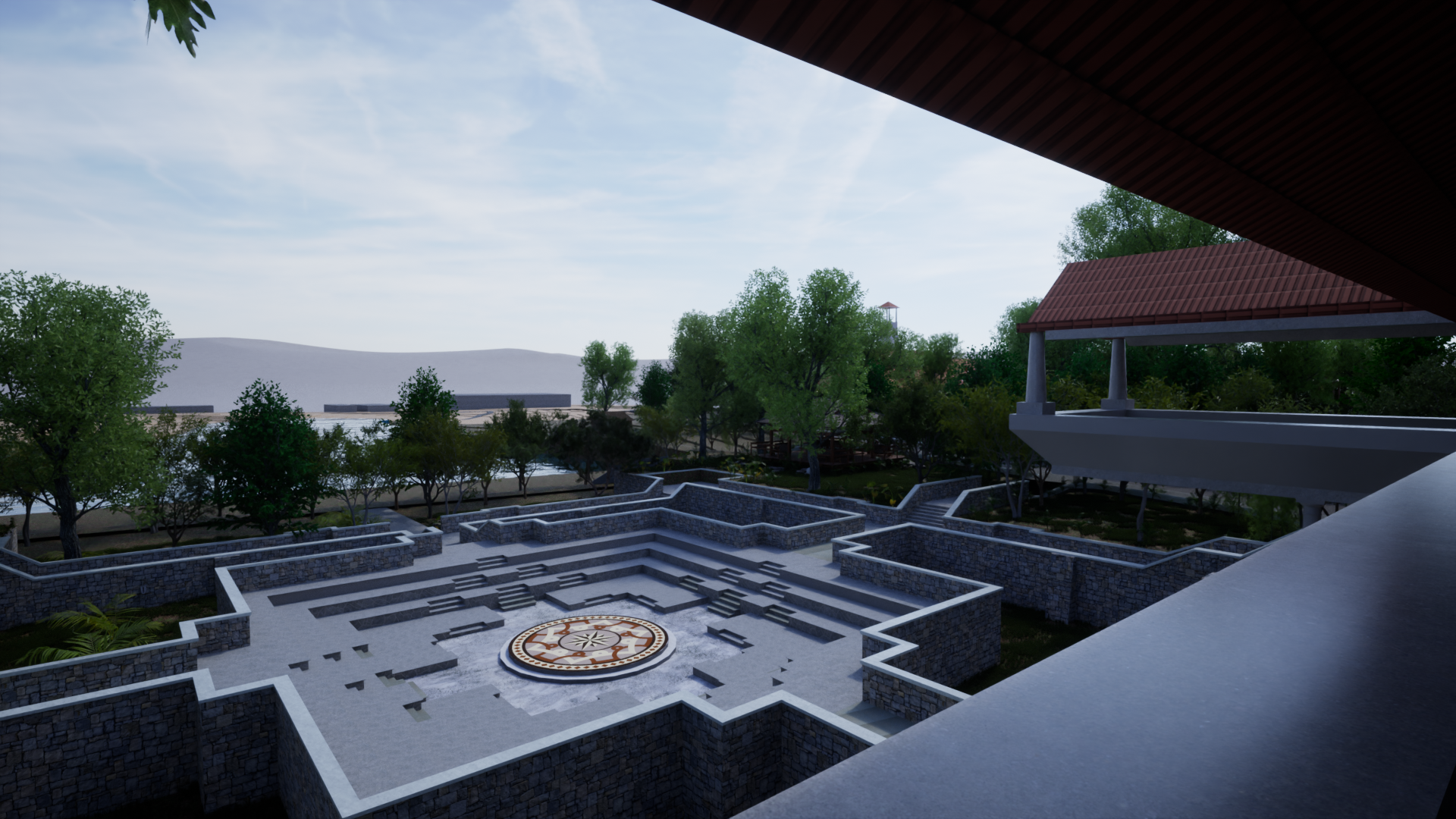
The masterplan’s organising spine is a planned axis that connects three primary elements: an amphitheatre at one end, a temple complex at the other, and a visitors’ centre at the midpoint. This axis is not merely a planning device — it is a spiritual journey made spatial. The visitor who arrives at the amphitheatre and walks toward the temple is enacting a progression from the social to the sacred, from the communal to the contemplative. The architecture along this axis is designed to amplify that progression: spaces become quieter, simpler, more charged with material and symbolic meaning as the visitor approaches the temple complex.
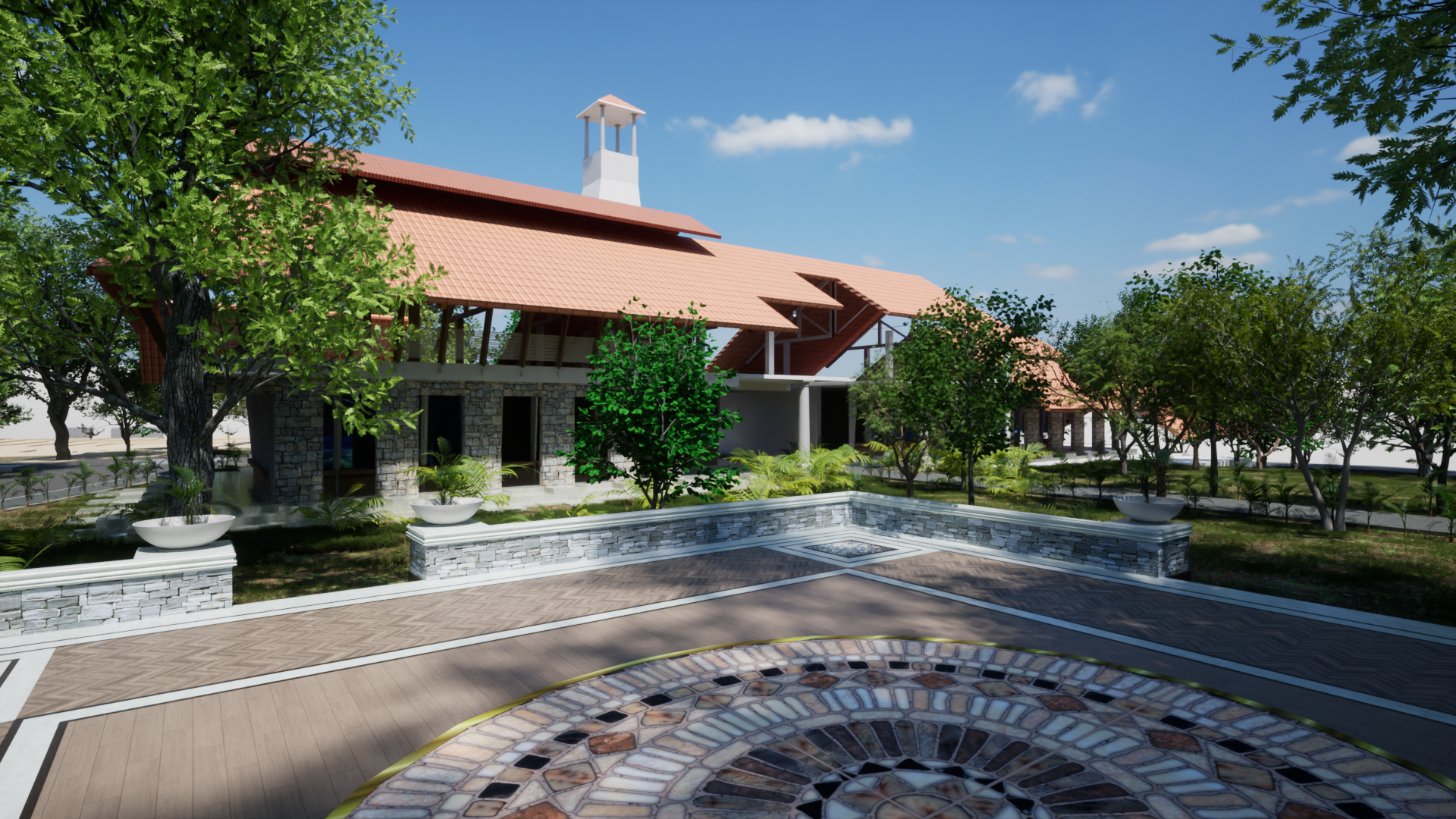
The visitors’ centre is a welcoming gateway that combines practical and experiential functions: reception areas, waiting rooms, orientation galleries, and food and beverage facilities that introduce visitors to the village’s values and programme before they proceed deeper into the site. The building is designed to ISKCON’s theological and aesthetic requirements — which include a preference for natural materials, regional craft traditions, and a visual language that references the Vaishnava architectural heritage of India’s temple traditions without literal reproduction.
Organic farming is integrated into the masterplan as a productive landscape element — not decoration but sustenance. The farm produces food for the community and for the visitors’ centre café, demonstrating a closed-loop relationship between agriculture and consumption that is central to the village’s ecological philosophy. Water conservation systems — rainwater harvesting, greywater recycling, and soil-based filtration — are integrated at the infrastructure level, ensuring that the village’s relationship to water is one of stewardship rather than extraction.
The ISKCON Talasari masterplan is Bricolage Bombay’s argument that sustainable development is not a technical problem to be solved by engineers — it is a design problem that requires the integration of ecological intelligence, cultural sensitivity, spiritual aspiration, and spatial imagination. The eco-village, when complete, will be one of the most significant examples of socially and ecologically conscious masterplanning in western India.
Location: Talasari, Maharashtra (Mumbai-Surat Highway)
Client: ISKCON Trust
Area: 36 Acres
Typology: Masterplanning / Eco-Village / Spiritual Architecture
Status: Completed