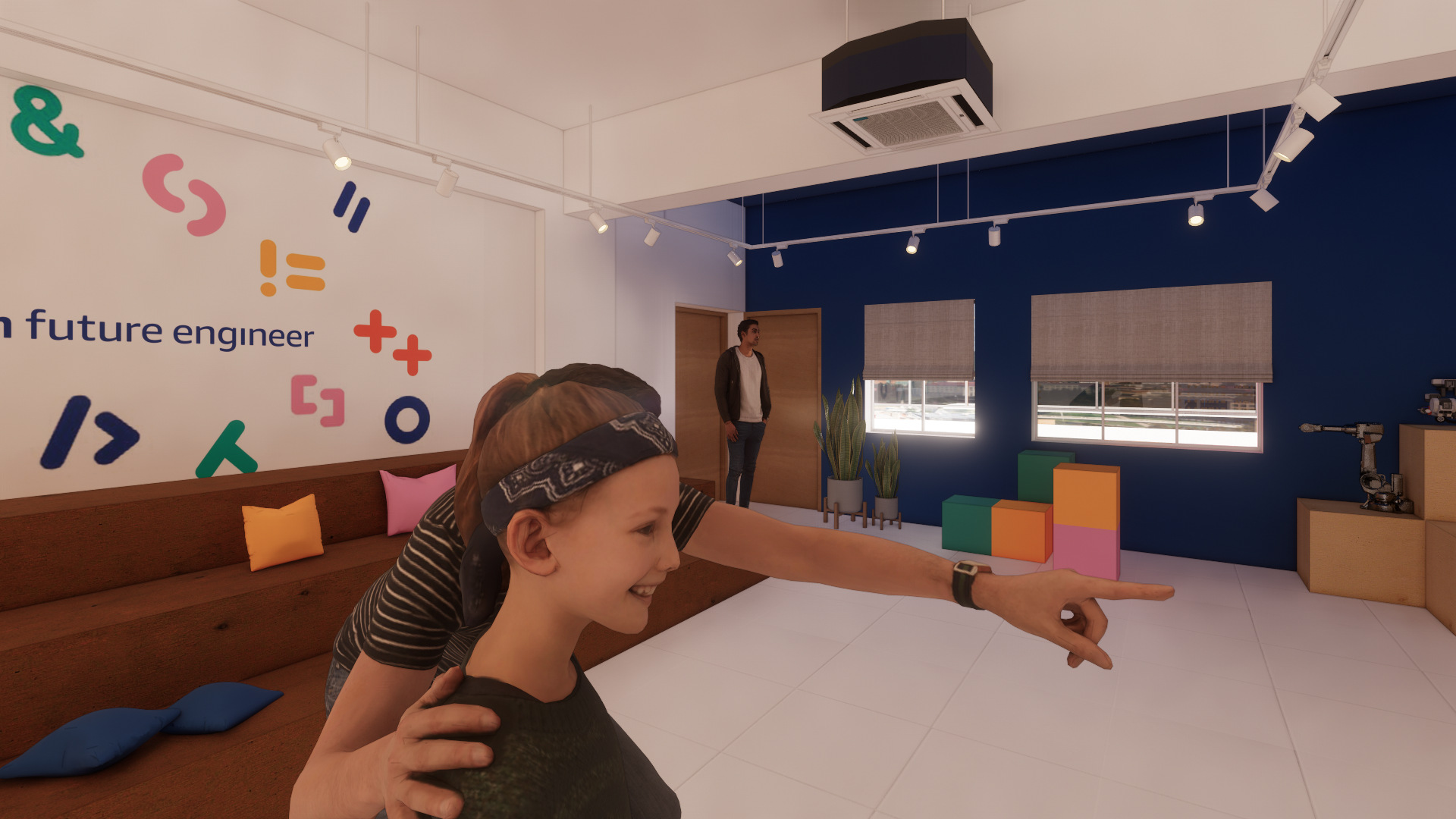
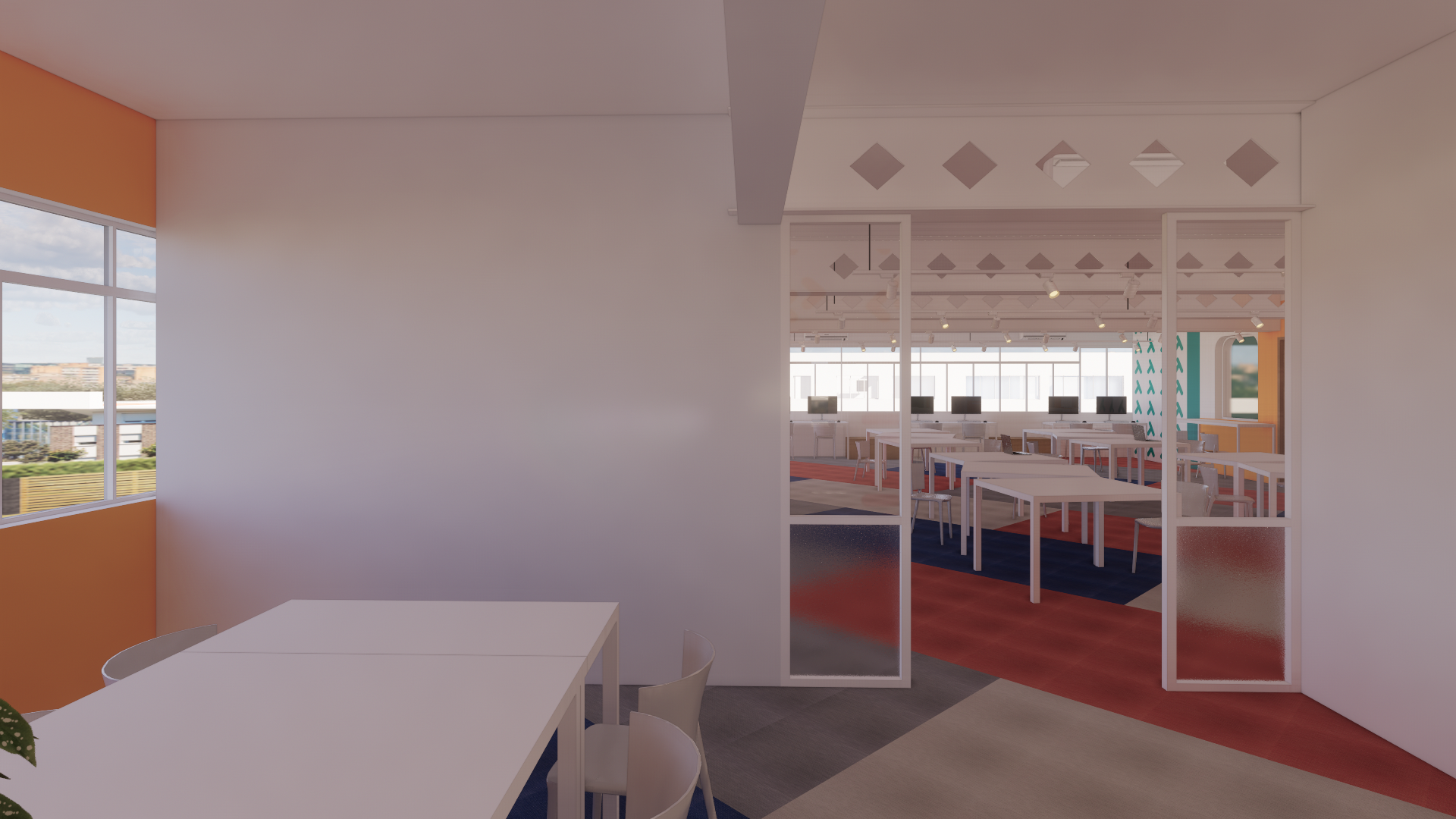
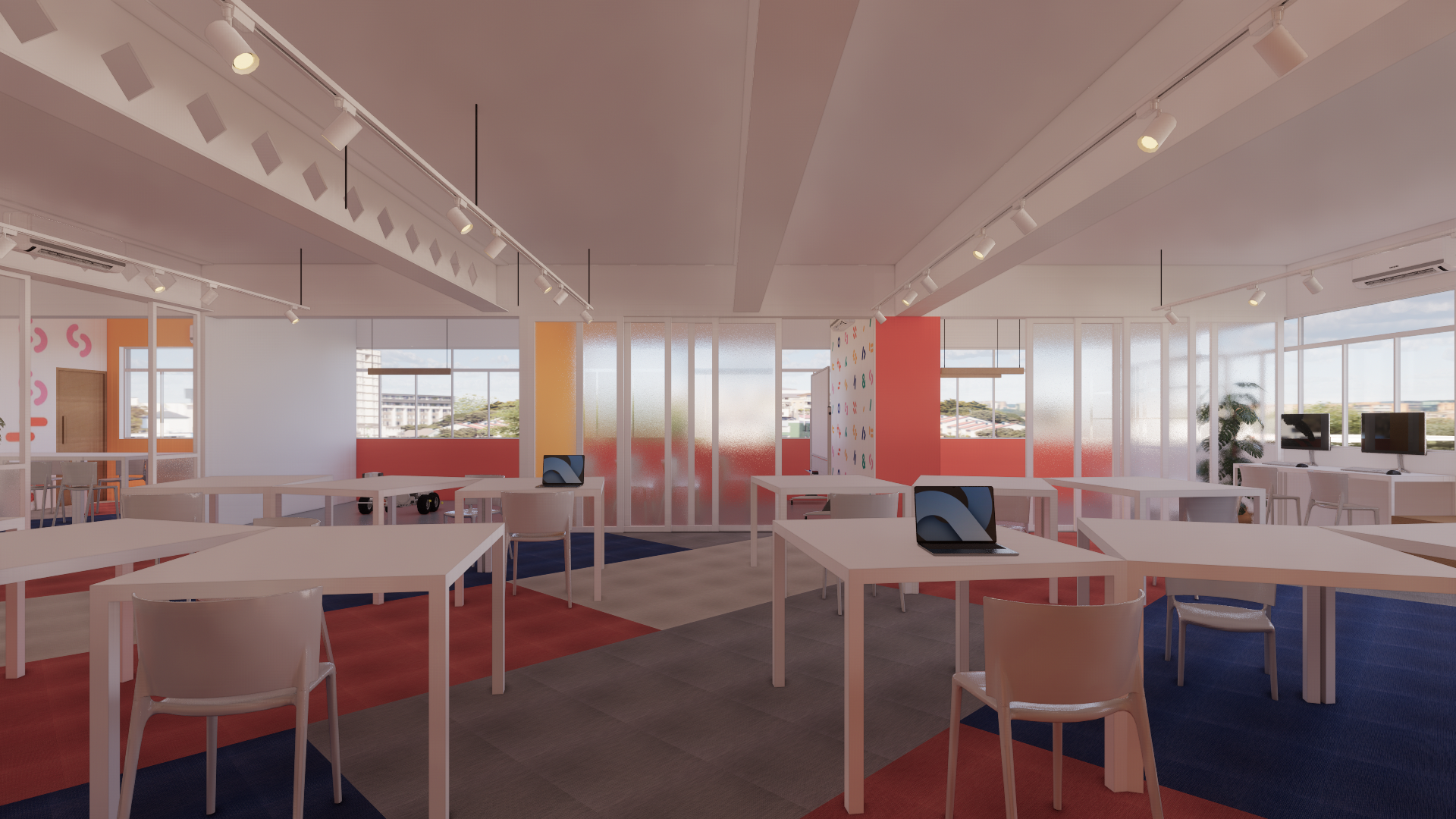
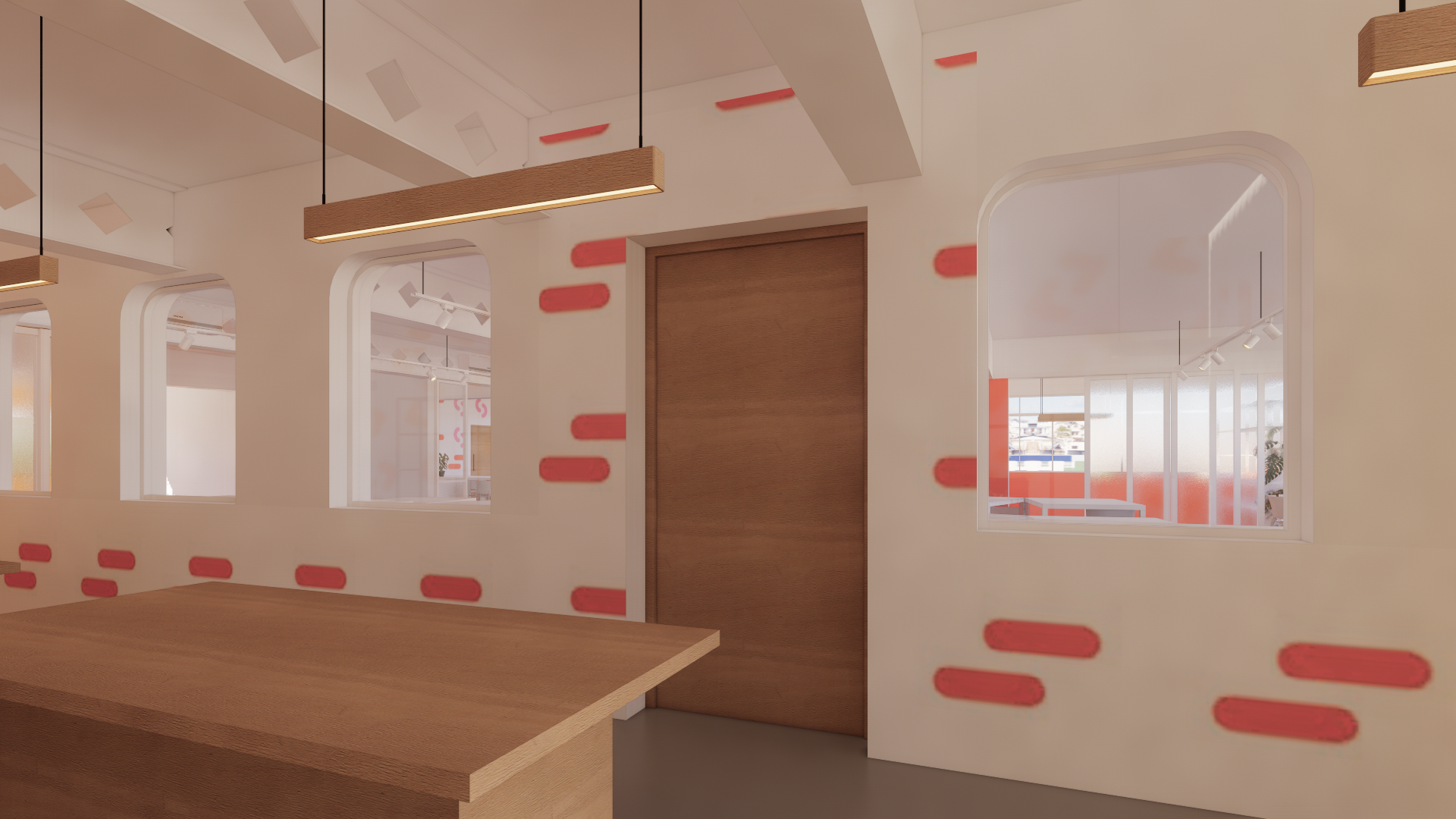
In the ecology of India’s design education landscape, the maker space is a recent and important arrival. It is a room — or a cluster of rooms — that proceeds from the conviction that young people learn best by doing, that the making of things is not a supplement to education but its core, and that the built environment can either support or obstruct that learning. Bricolage Bombay has been designing maker spaces since before the term was commonly used in India, and the TIS facility in Malleshwaram, Bengaluru — designed for The Innovation Story in partnership with Amazon’s Future Engineering Programme — is one of the studio’s most refined examples of the typology.
The project brief was both demanding and specific: create a cost-effective, educationally rigorous, and spatially imaginative maker lab that would serve children between the ages of six and ten, focused on STEM education, robotics, and learning by doing. The funding and collaboration structure was complex — Amazon Future Engineering Programme providing the technological infrastructure, The Innovation Story providing the educational programming and volunteer facilitation — and Bricolage Bombay was required to design a space that would function efficiently for both partners’ needs while remaining genuinely inspiring for the children it served.
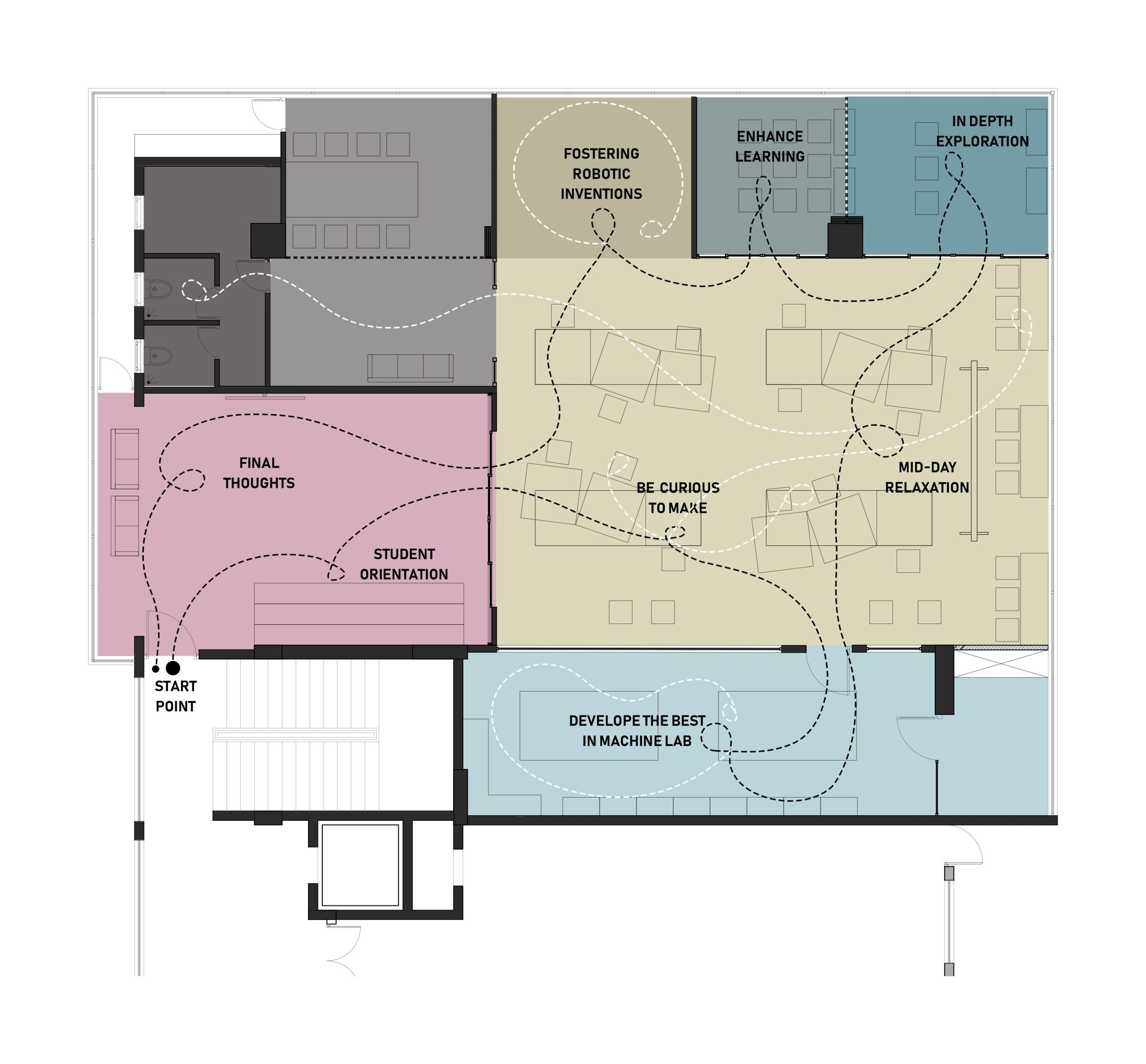
The spatial response was organised around the pedagogical model of Learning by Doing, Sharing, and Making — three verbs that became the architectural brief’s organizing logic. Doing requires space for individual work: workbenches at child height, tool storage at accessible levels, natural light for detailed work. Sharing requires space for group activity: flexible tables that can be reconfigured for collaborative projects, writable surfaces, areas for displaying work in progress. Making requires a variety of tools and materials arranged for access and discovery: a spatial landscape of possibility rather than a single predetermined workflow.
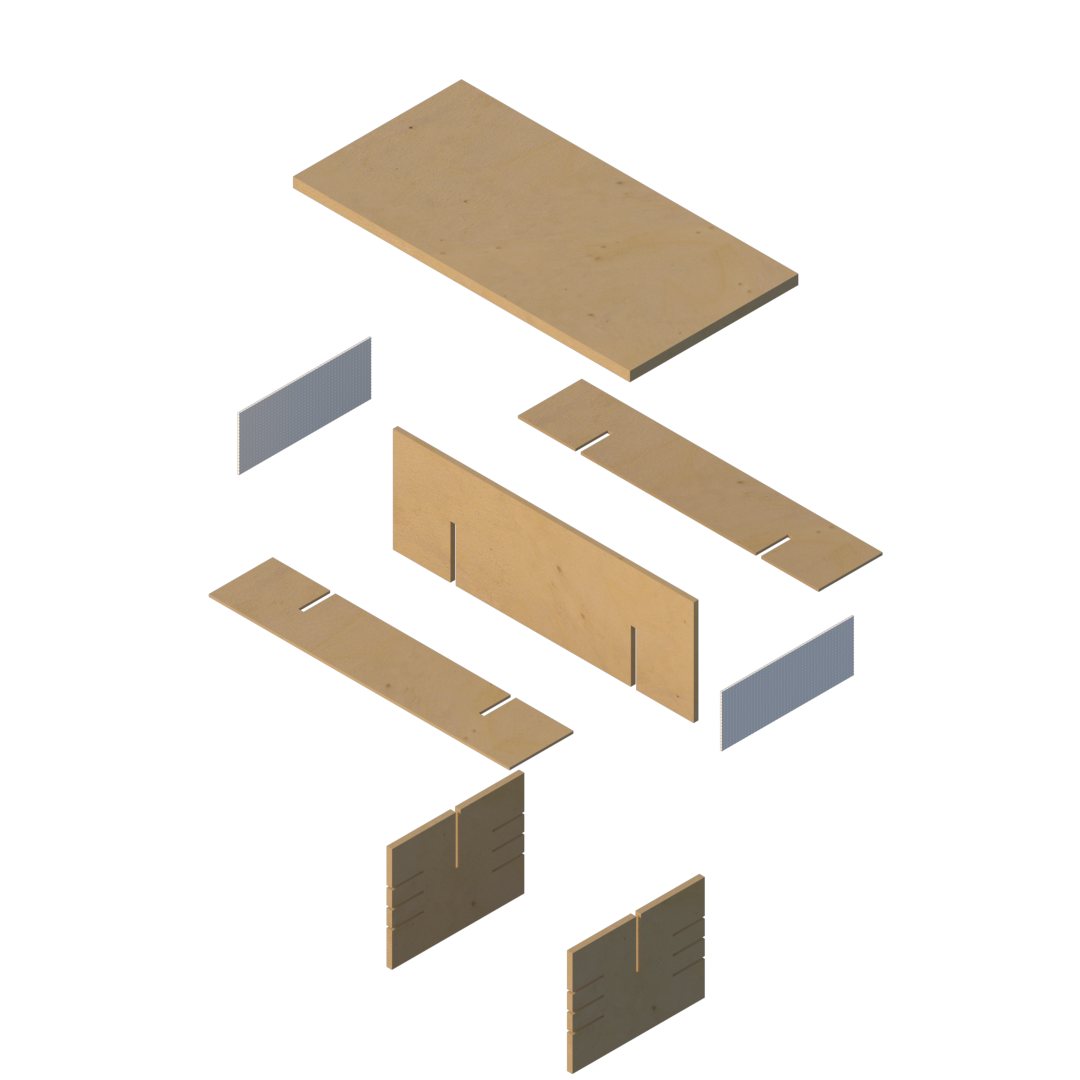
The interiors were designed with a material palette appropriate to the project’s cost constraints and the educational context: robust, cheerful, and honest. Industrial materials — perforated metal, plywood, powder-coated steel — were used for their durability and their implicit message: this is a place where things are made, not merely consumed. Graphics and branding, developed by Bricolage Bombay as part of the comprehensive commission, gave the lab a visual identity that communicated its purpose to children from the moment of arrival.
The TIS Bangalore facility has operated successfully since its completion, serving hundreds of children each year through the volunteer-led STEM programmes that The Innovation Story develops and deploys. It stands as an argument — made in built form, in Mangalore brick and powder-coated steel and natural light — that educational architecture need not be expensive to be excellent, and that design thinking applied rigorously to modest budgets can produce spaces of real consequence.
Bricolage Bombay is actively seeking to work with educational institutions, NGOs, government bodies, and corporates who wish to develop similar maker spaces across India. The TIS Bangalore and TIS Bandra projects provide a documented methodology and a proven spatial typology that can be adapted to different budgets, locations, and educational programmes.