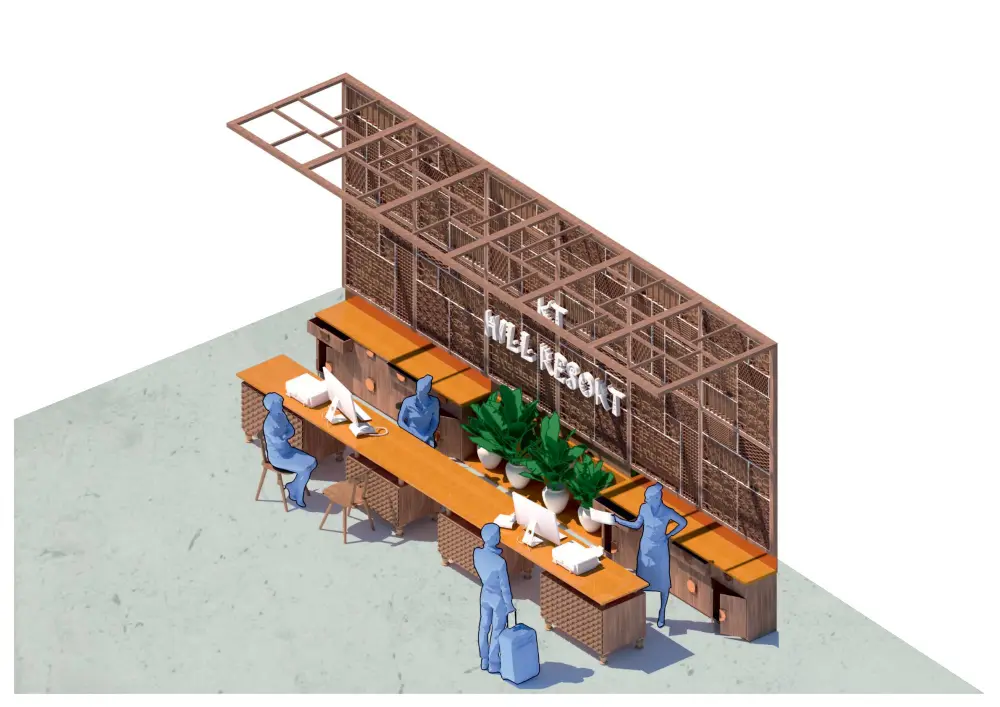
Avhyay Resort — Reception & Main Building
The best acts of conservation are also acts of invention. To inherit a building is to inherit all of its decisions — its siting, its structure, its aspirations — and to face the question of what those decisions mean for a world that has changed around them. Avhyay Resort, set on twelve acres at the edge of the Tungareshwar Forest in Virar, was built in 1985 by architects Akhtar Chauhan and Pradnya Kale, who are also the professional mentors of Vinit Nikumbh. When the KT Group commissioned Bricolage Bombay to reimagine the resort nearly four decades later, the brief was clear in its ambition and delicate in its sensitivities: transform the resort for the contemporary luxury market while honouring the intelligence of the original design and the irreplaceable quality of its natural setting.
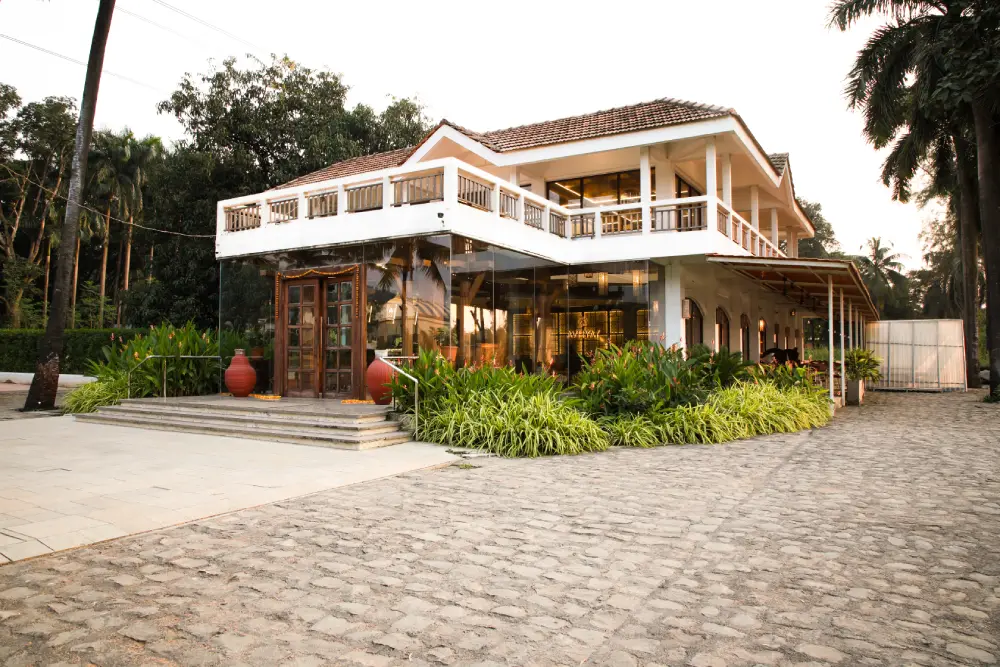
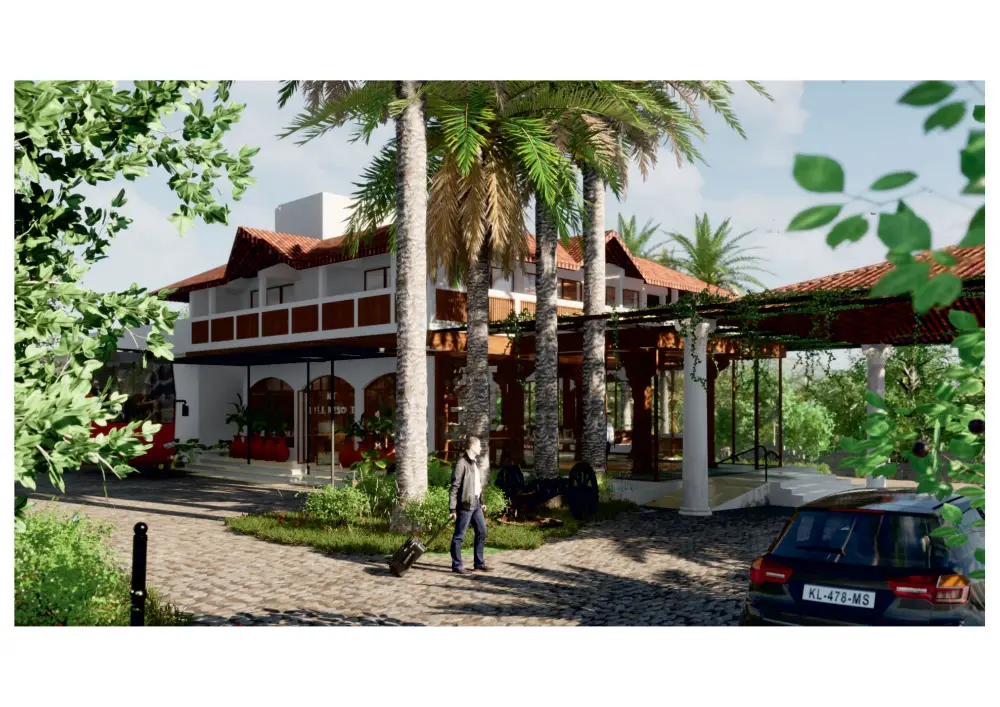
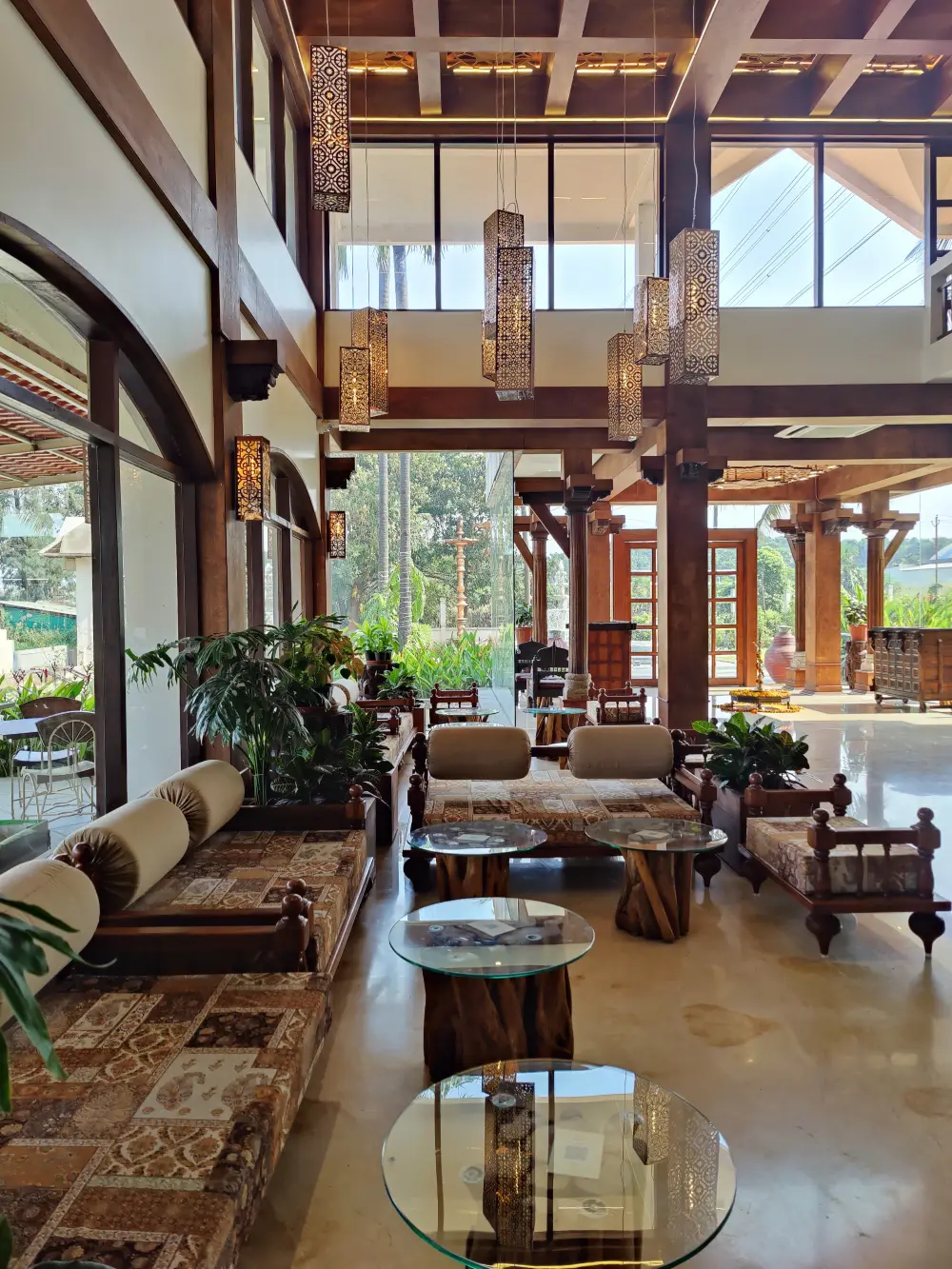
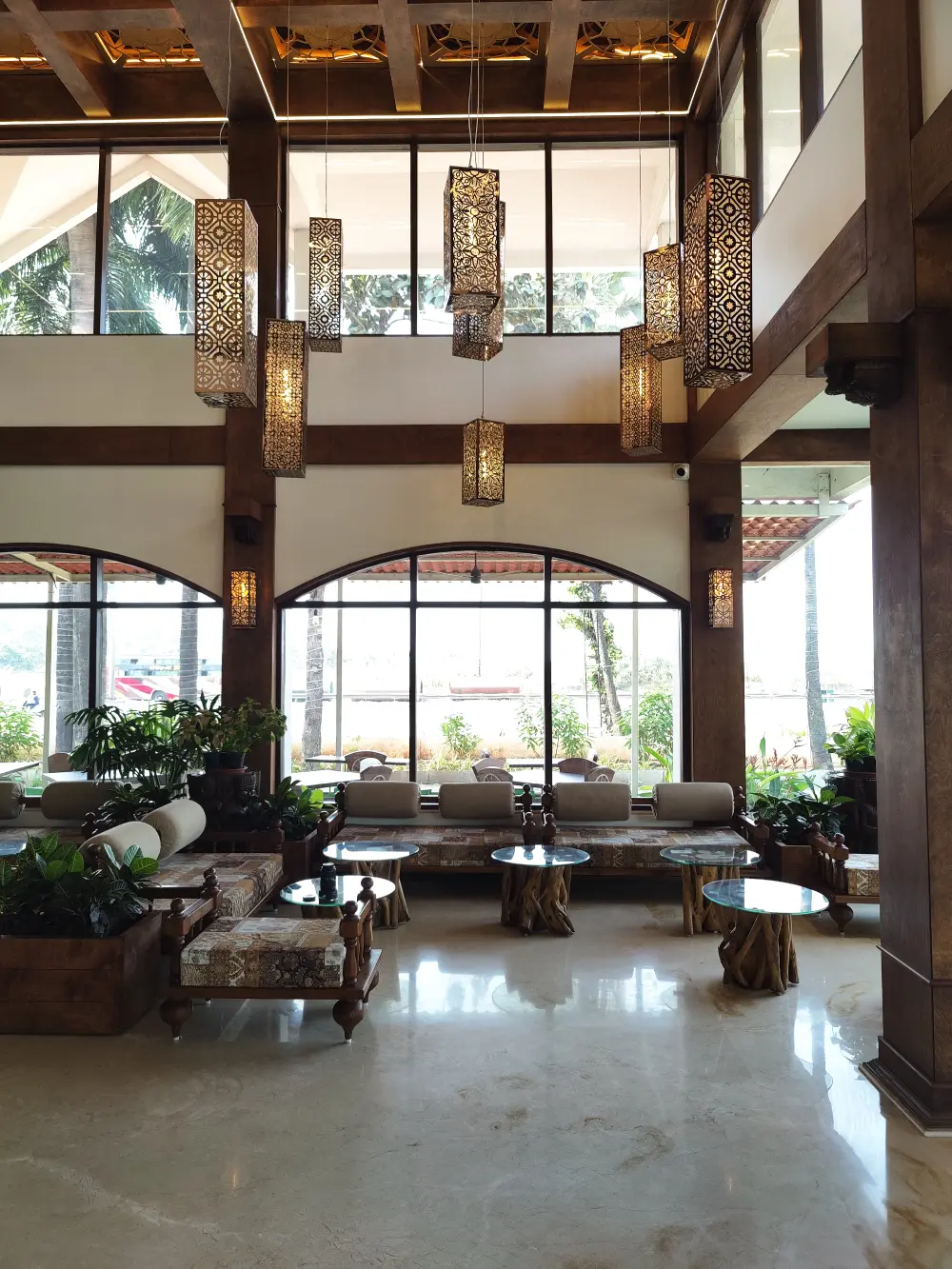
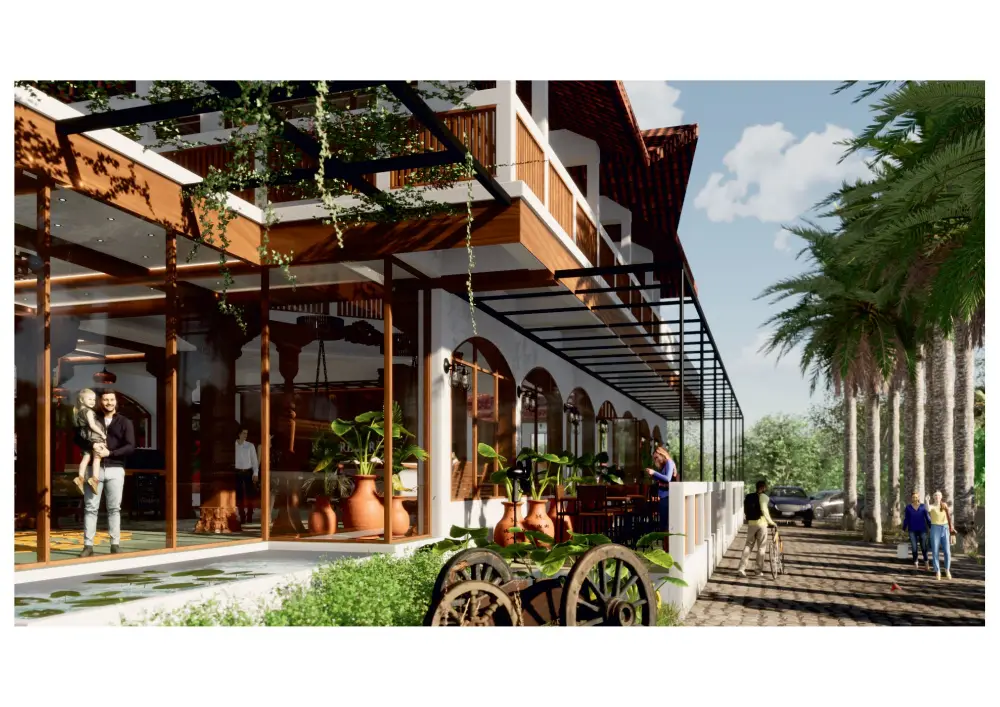
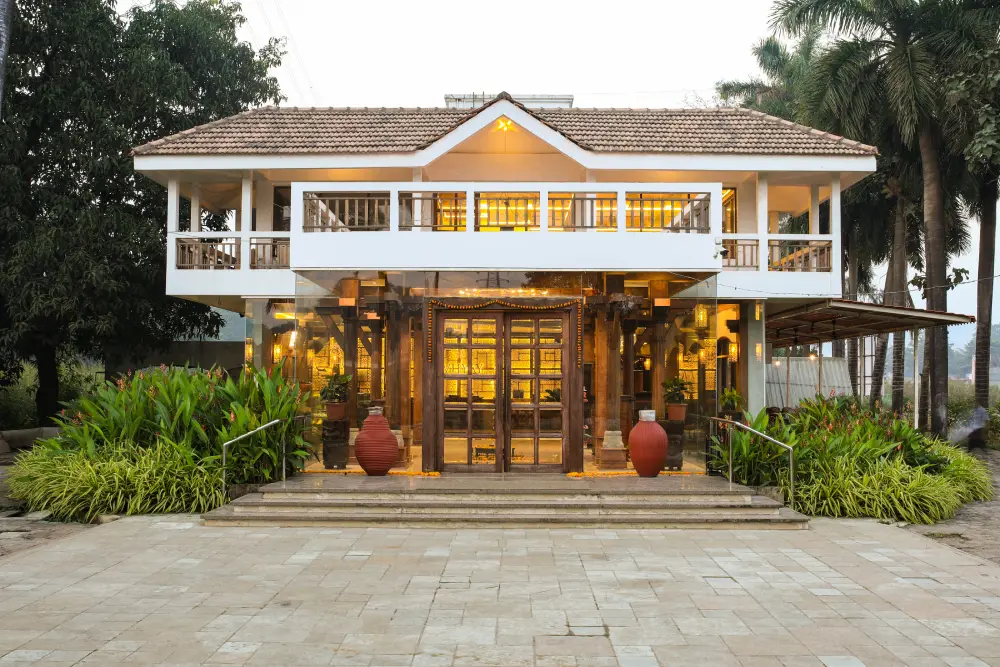
The reception building was the first and most publicly visible site of intervention. Bricolage Bombay extended the existing structure with a carefully proportioned arrival sequence: new steps, a generous welcoming area, and a glass-enclosed extension that brings natural light deep into the lobby while blurring the boundary between the forest outside and the interior within. The ceiling of the extended lobby features a mandala pattern executed in a material that references India’s craft traditions, while fountains flanking the entrance establish a threshold of sound and movement between the car park and the forest resort. The effect is of gradual decompression — a spatial journey that begins to slow the visitor before they have even checked in.
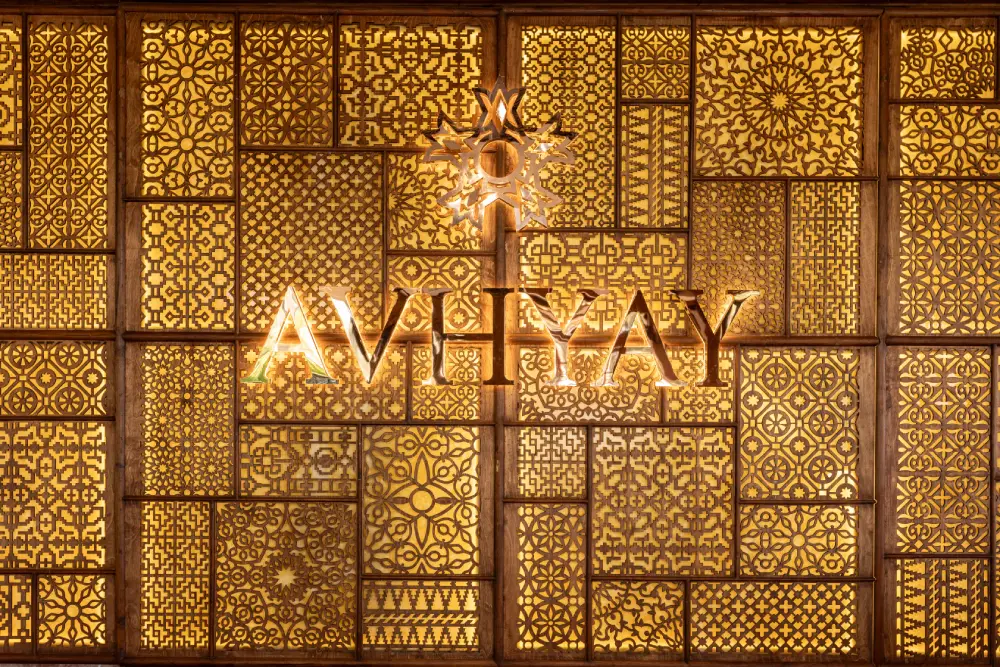
The reception desk is the centrepiece of the lobby and the most remarkable single object in the entire resort. Designed by Vinit Nikumbh, it is built entirely from six antique doors salvaged from a Jain Derasar (temple) in Bhavnagar, Gujarat — doors that are likely over a century old, elaborately carved, and charged with the accumulated devotional energy of their original context. The decision to incorporate these doors into a hotel reception desk is an act of cultural bricolage in the most literal sense: the past is not erased but reassembled into something new. Behind the desk, a backlit wall displays traditional Indian fabric patterns that glow with a warm, amber light, making the lobby feel simultaneously ancient and contemporary.
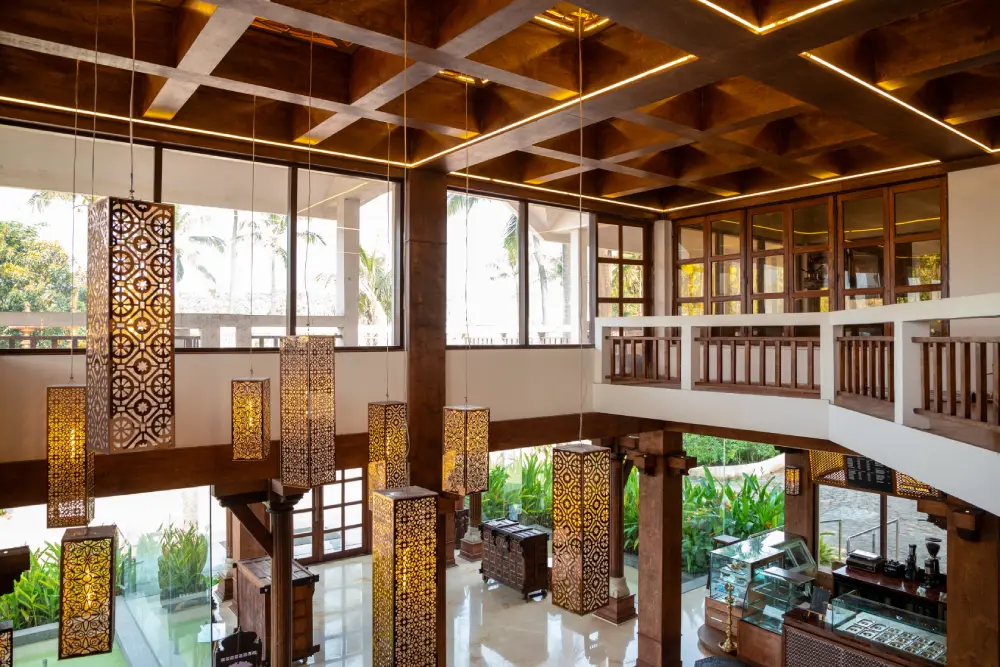
The material palette throughout the reception area and public spaces was developed with sustainability as its primary constraint. No resource-intensive artificial materials. No veneers imitating natural stone. The resort uses Shahabad limestone, reclaimed timber, and natural mud plasters — materials that are honest about their origins, age gracefully, and connect the interior to the forest landscape beyond. The column brackets, bases, and door frames sourced from Bhavnagar and Gujarat are integrated throughout the main building, creating a spatial vocabulary rooted in Gujarat’s extraordinary tradition of architectural woodcraft.
The Coffee Karma counter in the reception lobby — branded and designed by Bricolage Bombay — introduces the resort’s first food and beverage experience at the moment of arrival. Its facade, constructed from a reclaimed jail structure sourced in Ahmedabad and meticulously cleaned and restored, provides a counterpoint of rugged industrial character to the lobby’s crafted warmth. The juxtaposition is deliberate: Bricolage Bombay is a studio comfortable with productive dissonance, and the Coffee Karma counter is an early signal to the guest that Avhyay is a resort with ideas.
Avhyay Resort after its renovation has been received with exceptional enthusiasm by the hospitality market. Reviews from guests consistently cite the arrival experience — the sense of being welcomed into a place that has been thought about deeply, that carries India’s design heritage without nostalgia, and that frames the Tungareshwar Forest as a living presence rather than a mere backdrop — as the defining quality of a stay here. For Bricolage Bombay, Avhyay represents the maturation of a practice capable of working at every scale of the hospitality experience, from masterplan to material detail.