COURTYARD HOUSE
Introduction
The Courtyard House is a climate-responsive residential project that reinterprets traditional Indian domestic architecture through a contemporary lens. Anchored around a central open-to-sky courtyard, the design draws from vernacular planning principles where built form and open space exist in a symbiotic relationship. The project emphasizes inward-looking spatial organization to ensure privacy while creating a strong connection between light, air, and everyday living. Rather than directly replicating traditional forms, the design abstracts familiar elements into a refined architectural language defined by proportion, rhythm, and spatial clarity.
Architecture and Spatial Language
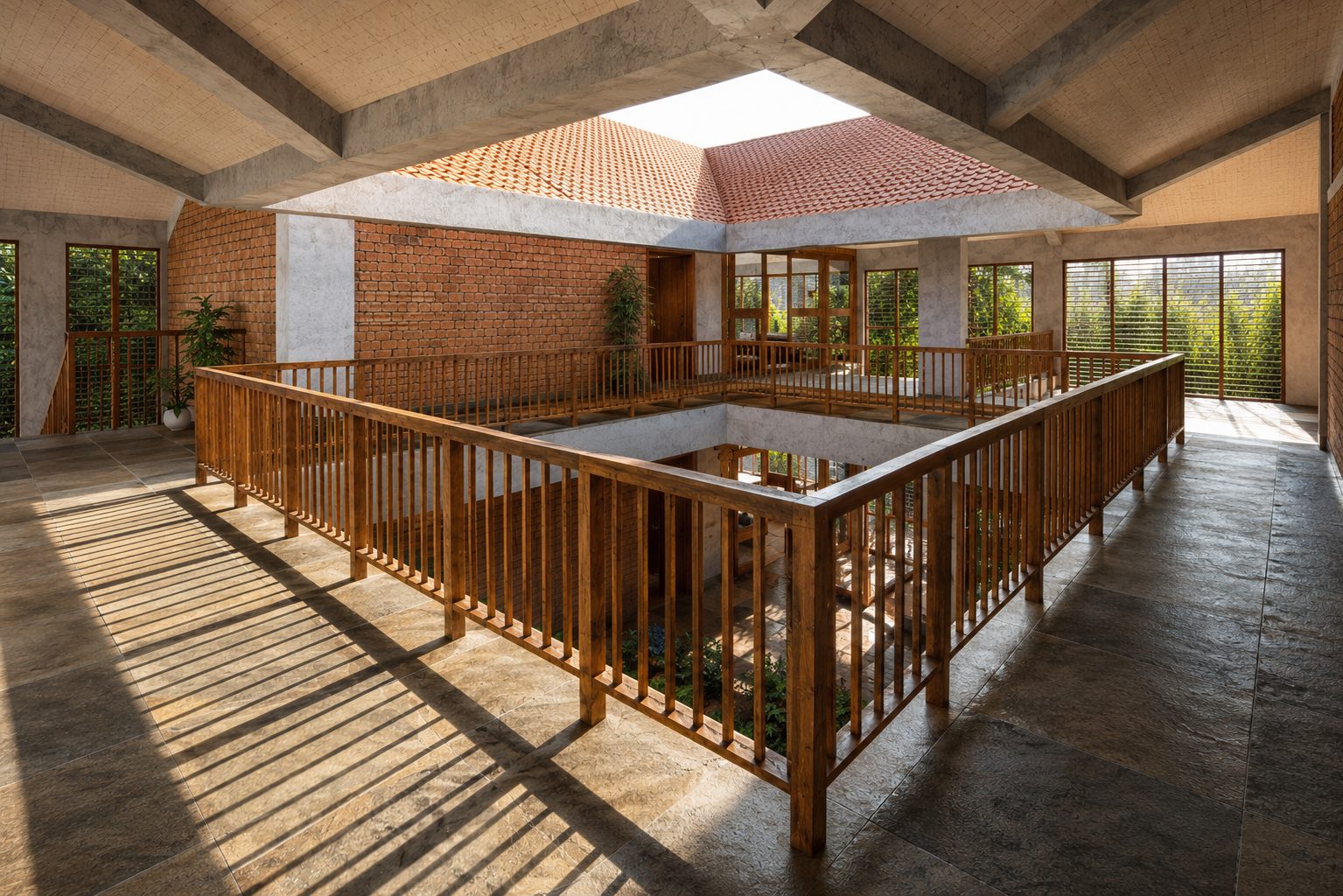
The spatial organization is structured around a central courtyard that acts as the heart of the house, both functionally and environmentally. Built volumes are arranged along its periphery, creating a continuous loop of circulation and visual connectivity. The ground floor accommodates public and semi-private functions such as living, dining, kitchen, and bedrooms, all oriented to maintain a relationship with the courtyard. Secondary courtyards further enhance spatial layering and climatic performance.
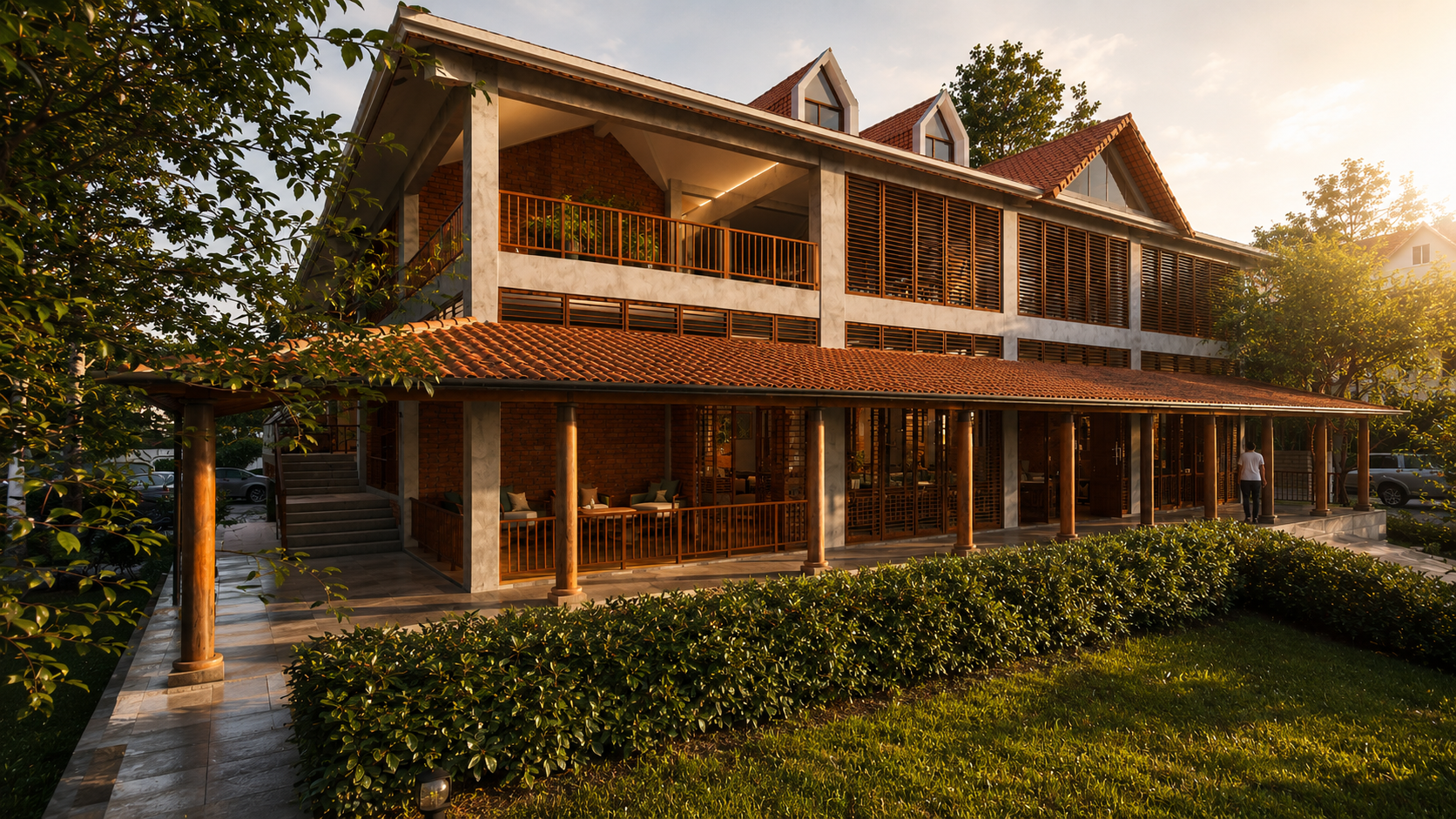
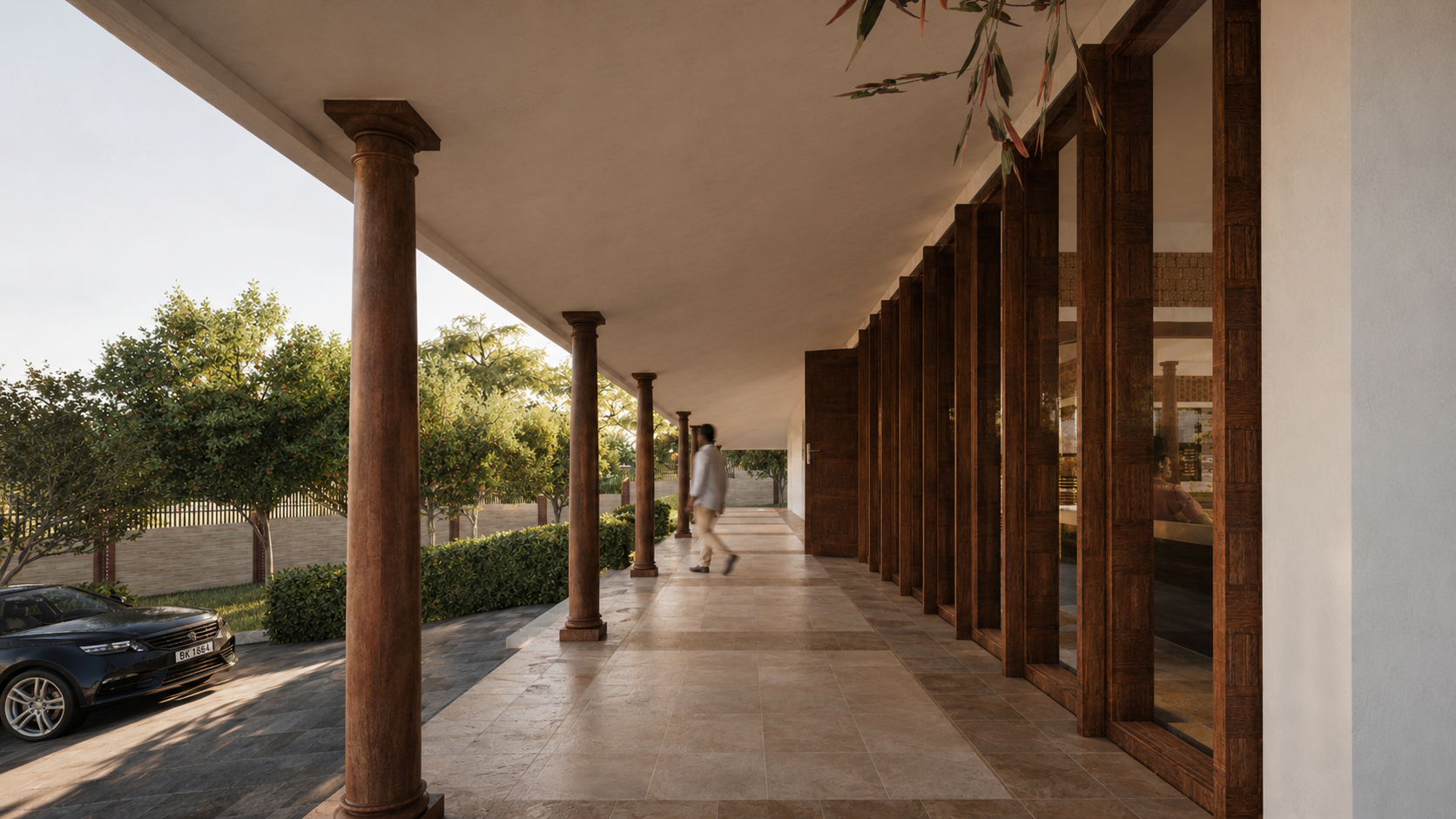
On the first floor, private spaces including bedrooms, study areas, and a home theatre are organized to maintain visual links with the central void. The architecture incorporates elements such as sloping roofs, verandahs, wooden columns, and framed openings, reinterpreted in a contemporary manner. The design emphasizes porosity, allowing light and ventilation to permeate the built form while maintaining a coherent spatial hierarchy.
Domesticity and Living Experience
The house is designed to support a multi-functional and layered domestic lifestyle. It accommodates a comprehensive residential program including multiple bedrooms, formal and informal living areas, dining spaces, and dedicated leisure zones such as a home theatre and study rooms. The planning ensures a gradual transition from public to private spaces, allowing both interaction and seclusion.
The courtyard plays a central role in everyday living, acting as a shared space that visually and physically connects different parts of the house. Circulation corridors and transitional spaces double as social spill-out zones, enhancing the experiential quality of movement through the house.
Interiors and Materiality
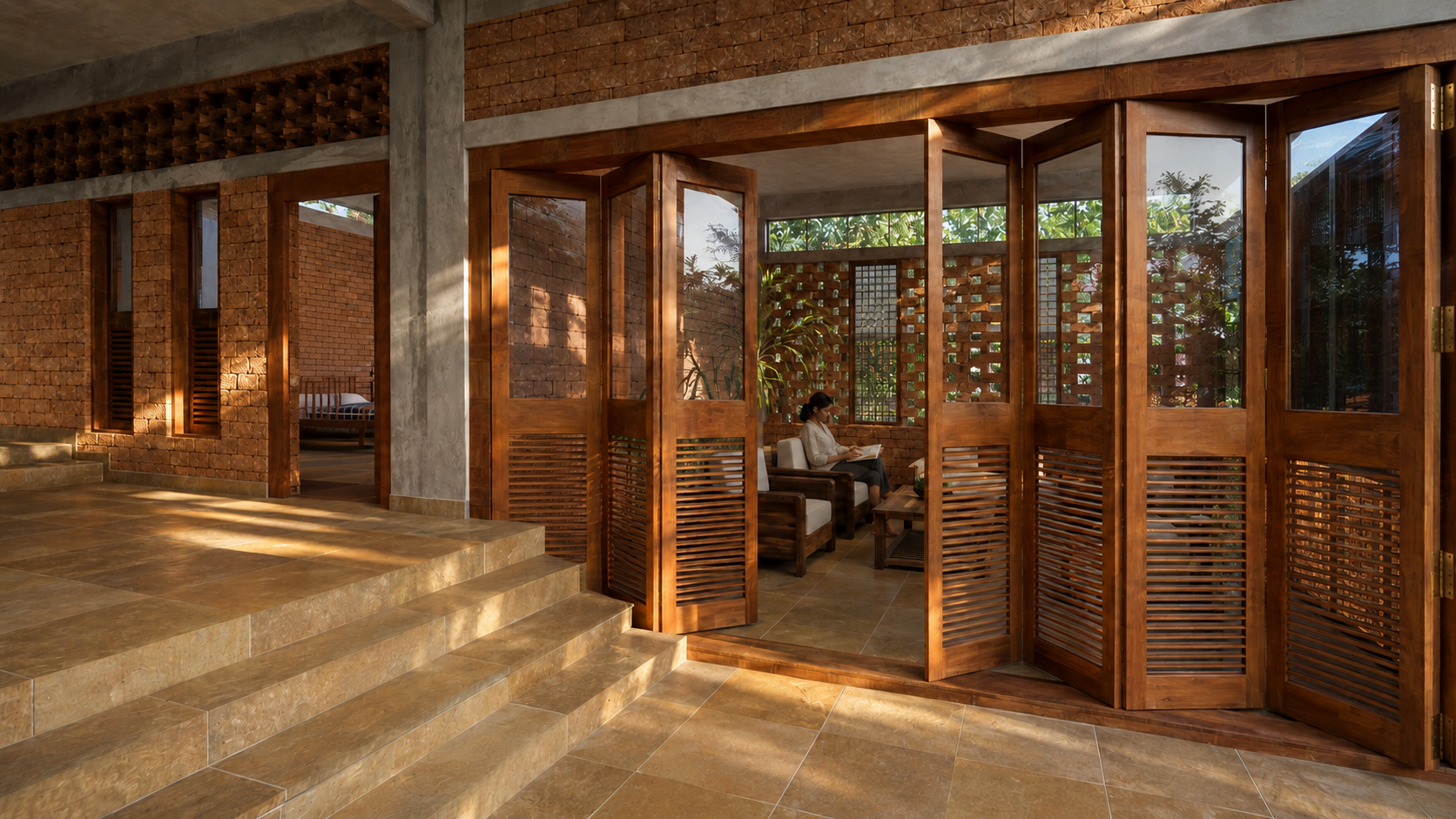
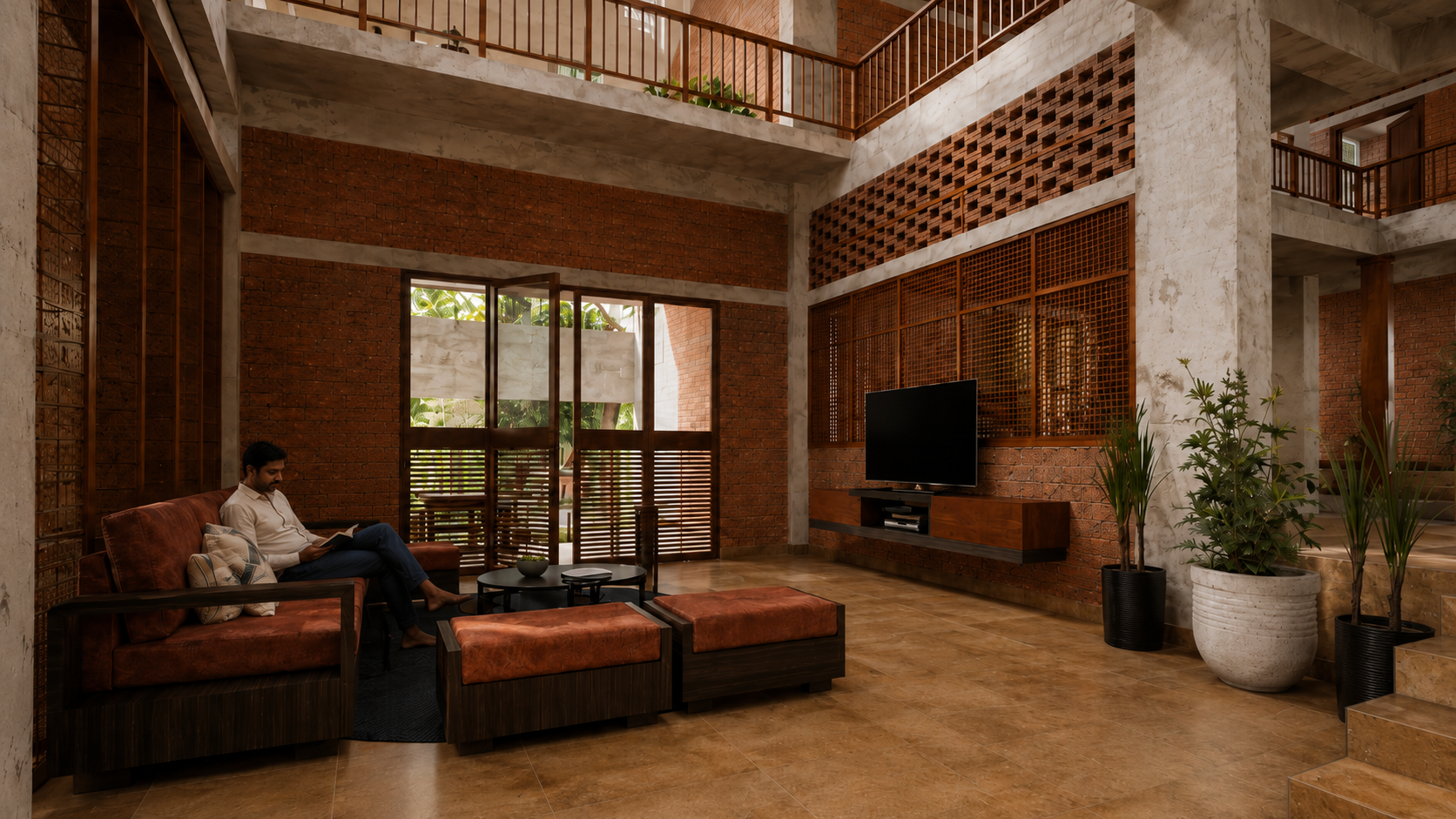
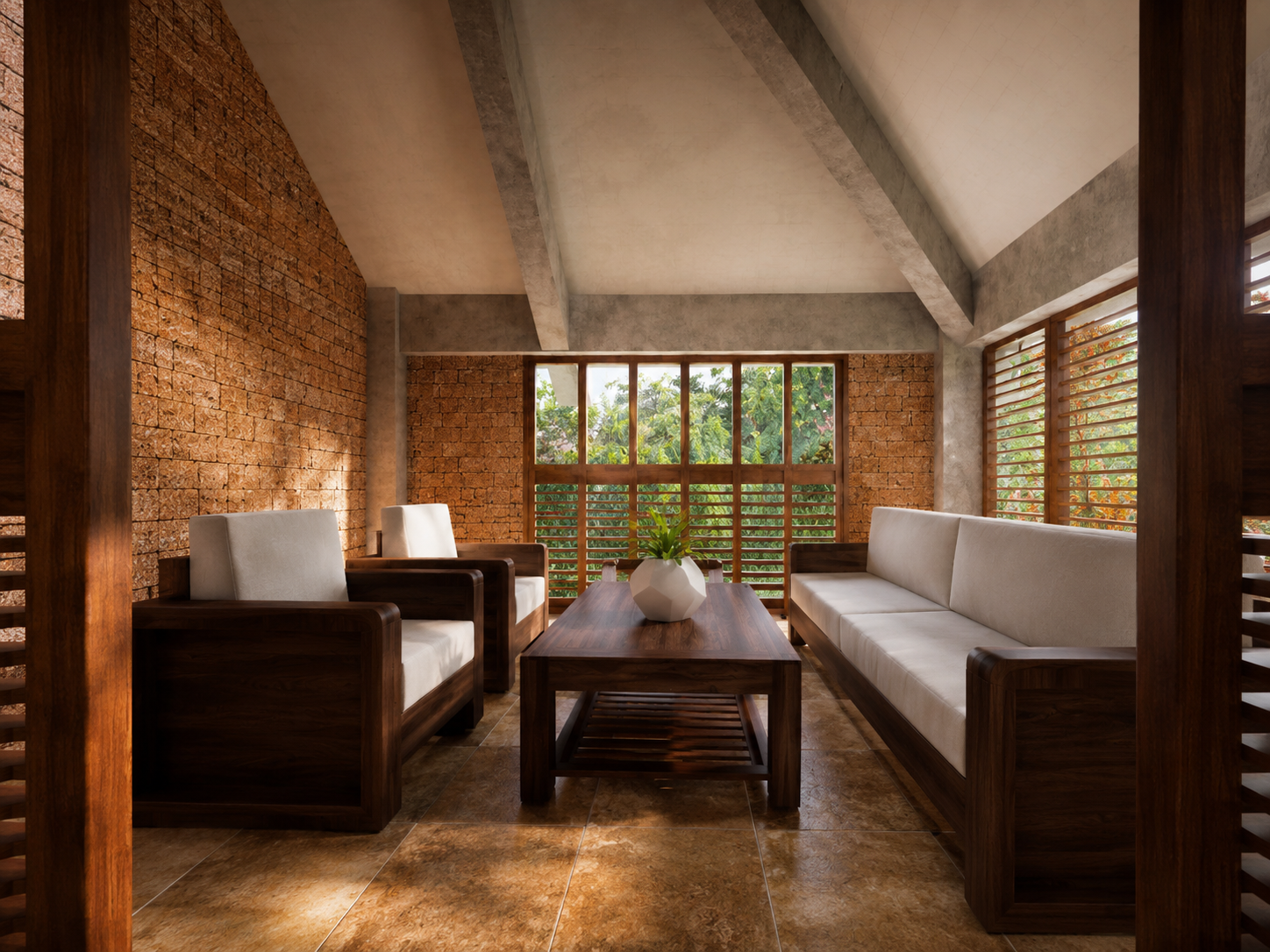
The interior design follows a balanced approach between semi-traditional and semi-modern aesthetics, creating a cohesive yet varied spatial experience. The material palette includes exposed brick walls, wooden furniture and elements, natural stone or tiled flooring, and plastered surfaces. These materials establish warmth and tactility while maintaining visual consistency.
Each space is treated with subtle variation through accent walls, textures, and finishes such as wooden panels, brick surfaces, or neutral painted walls. The use of louvred openings, jali elements, and crafted wooden details enhances both functionality and character. Selective use of false ceilings differentiates contemporary spaces, while more traditional areas retain exposed or minimal ceiling treatments.
Hospitality and Flexibility
The spatial configuration allows for flexibility in use, enabling the house to accommodate extended family living and varied occupancy patterns. Multiple bedrooms and living areas provide adaptability, while the zoning ensures privacy is maintained even with simultaneous use of different parts of the house. The design supports both everyday domestic life and larger social gatherings without compromising spatial clarity.
Climate and Context
The Courtyard House is deeply rooted in passive design strategies suited to its climatic context. The central courtyard facilitates stack ventilation and consistent daylight penetration, reducing reliance on artificial systems. Secondary courtyards create microclimates that improve thermal comfort.
Thick masonry walls provide thermal mass, while shaded openings, louvers, and jali screens control heat gain and enhance airflow. The integration of verandahs and transitional spaces further buffers interior environments from external climatic conditions, making the house both energy-efficient and comfortable.
A Contemporary Courtyard Home
The Courtyard House is a contemporary interpretation of traditional spatial principles, where architecture is shaped by climate, materiality, and lived experience. By organizing the home around a central void and employing a restrained material palette, the design achieves a balance between cultural continuity and modern functionality. The project stands as a thoughtful exploration of how vernacular ideas can be translated into a refined, contemporary residential environment.
Location : Chiplun, Maharashtra
Client: Mr Santosh Kadam
Area : 7000 sq.ft
Typology: Architecture + Interiors
Status: Completed (2021)